Poetly
Expanding your vocabulary with the words of the greatest poets. Research, product strategy, and design.
Expanding your vocabulary with the words of the greatest poets. Research, product strategy, and design.

- Should we add one more language learning app? (Thought process)
The observation
Serious learners outgrow their first app fast
Research and user interviews pointed to a consistent pattern. People start with Duolingo; it is the obvious entry point. But those who get serious about a language quickly move on or add other tools alongside it. The core insight is that immersion is the goal, and apps are just one part of a broader strategy. Songs, films, podcasts, conversations — anything that puts the language in context.
Poetry sits in an interesting position here. It was not mentioned unprompted, but it shares the same underlying logic as the tools people did reach for: rhythm, repetition, and emotional resonance make things stick. The gap was not another beginner app. It was something for learners who already have the habit and want to go deeper.
The research was attitudinal rather than behavioural — one method, not multiple independent sources. That was a real limitation, and one worth naming. In practice, a single round of interviews is better than nothing but not enough to validate a product direction. The findings shaped the concept; they did not confirm it.
Deep dive into the research process
The concept
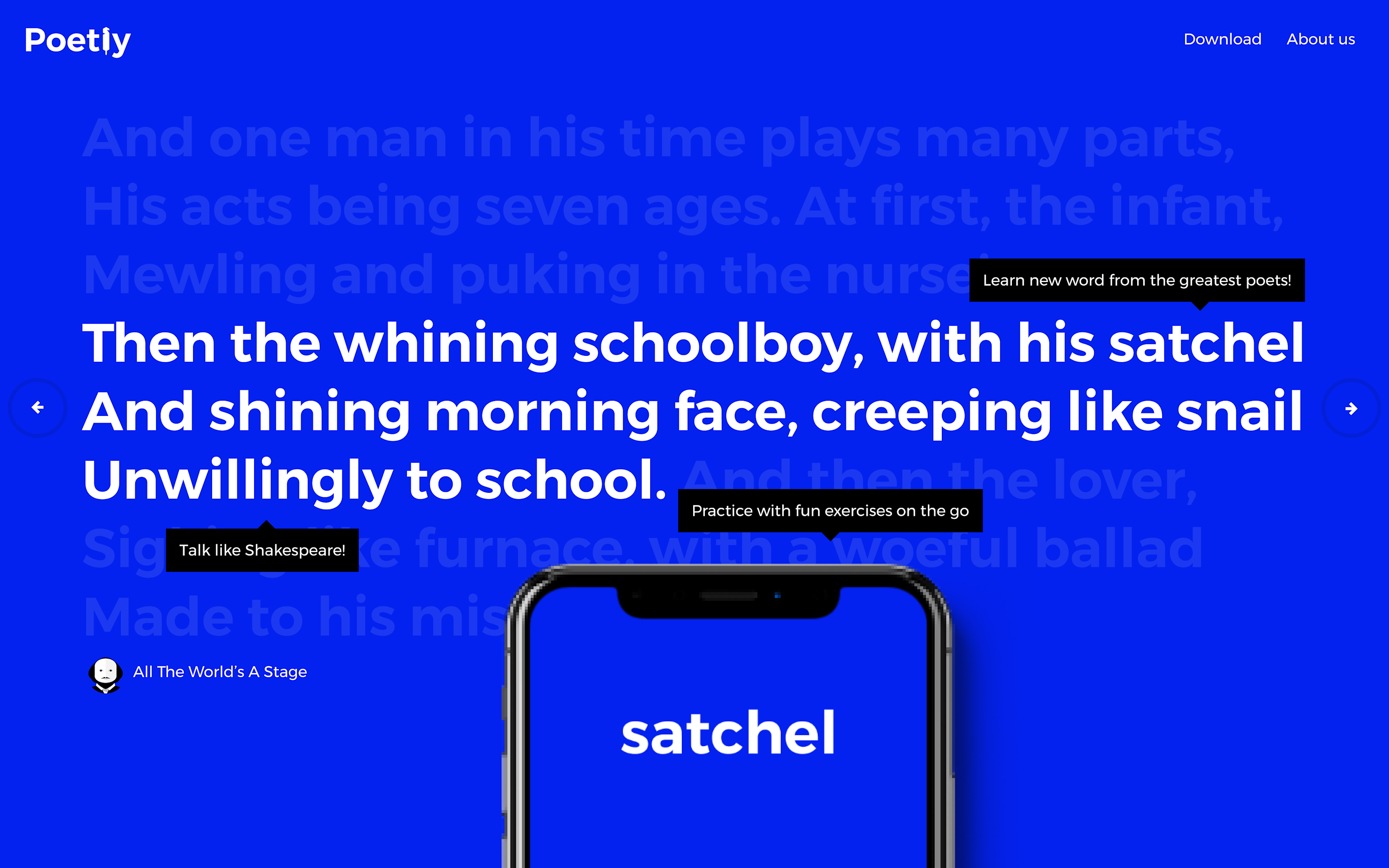
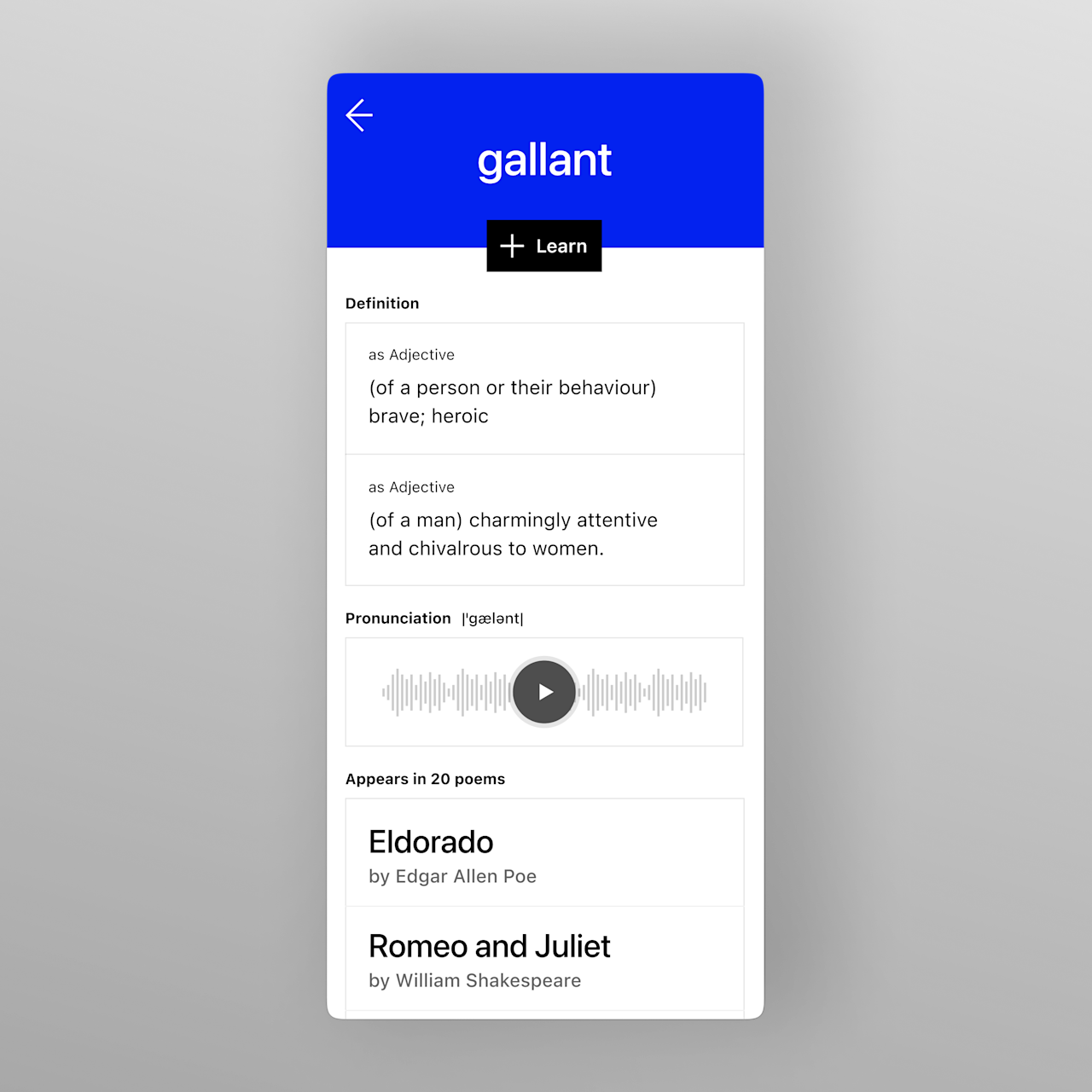
Poetly curates words from famous poems
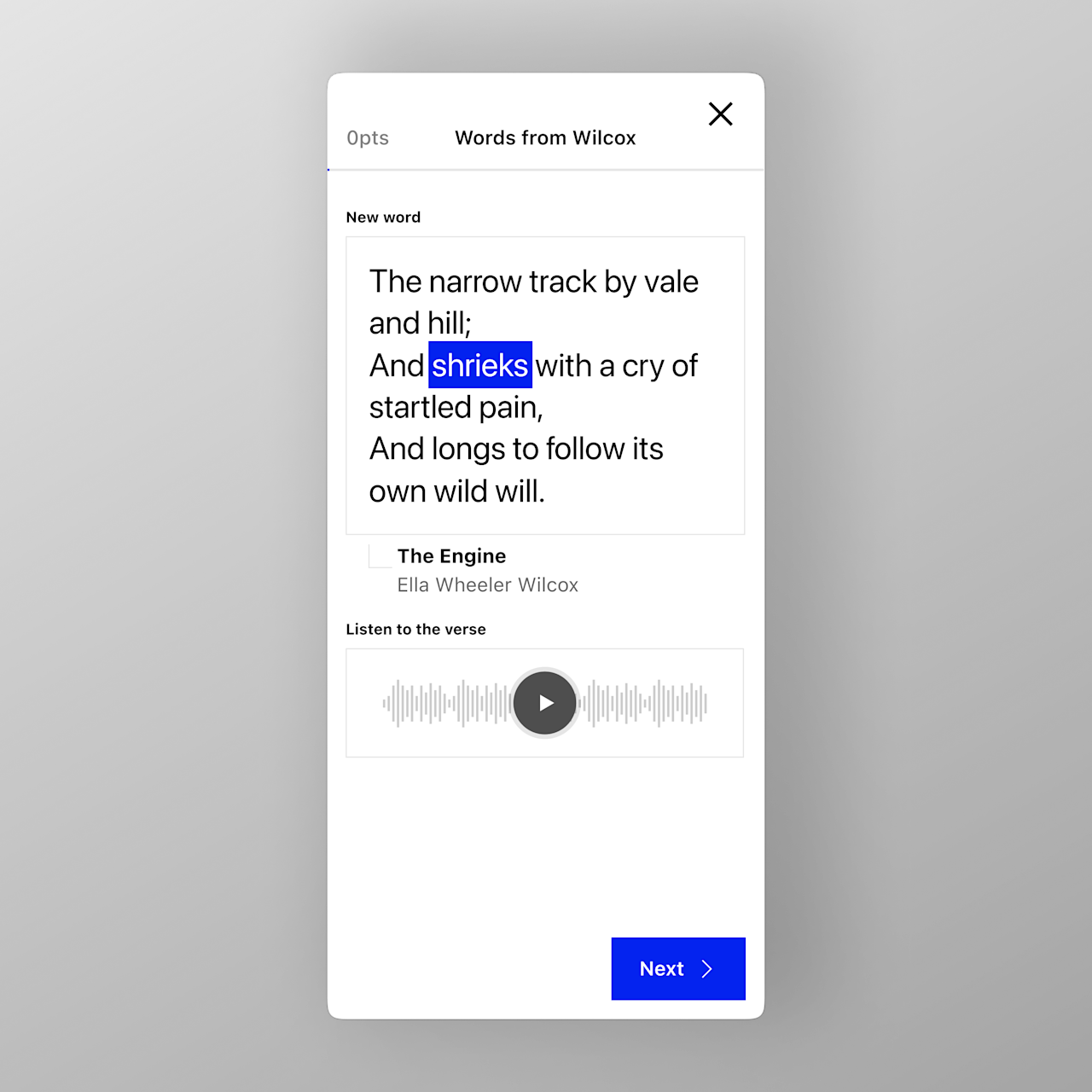
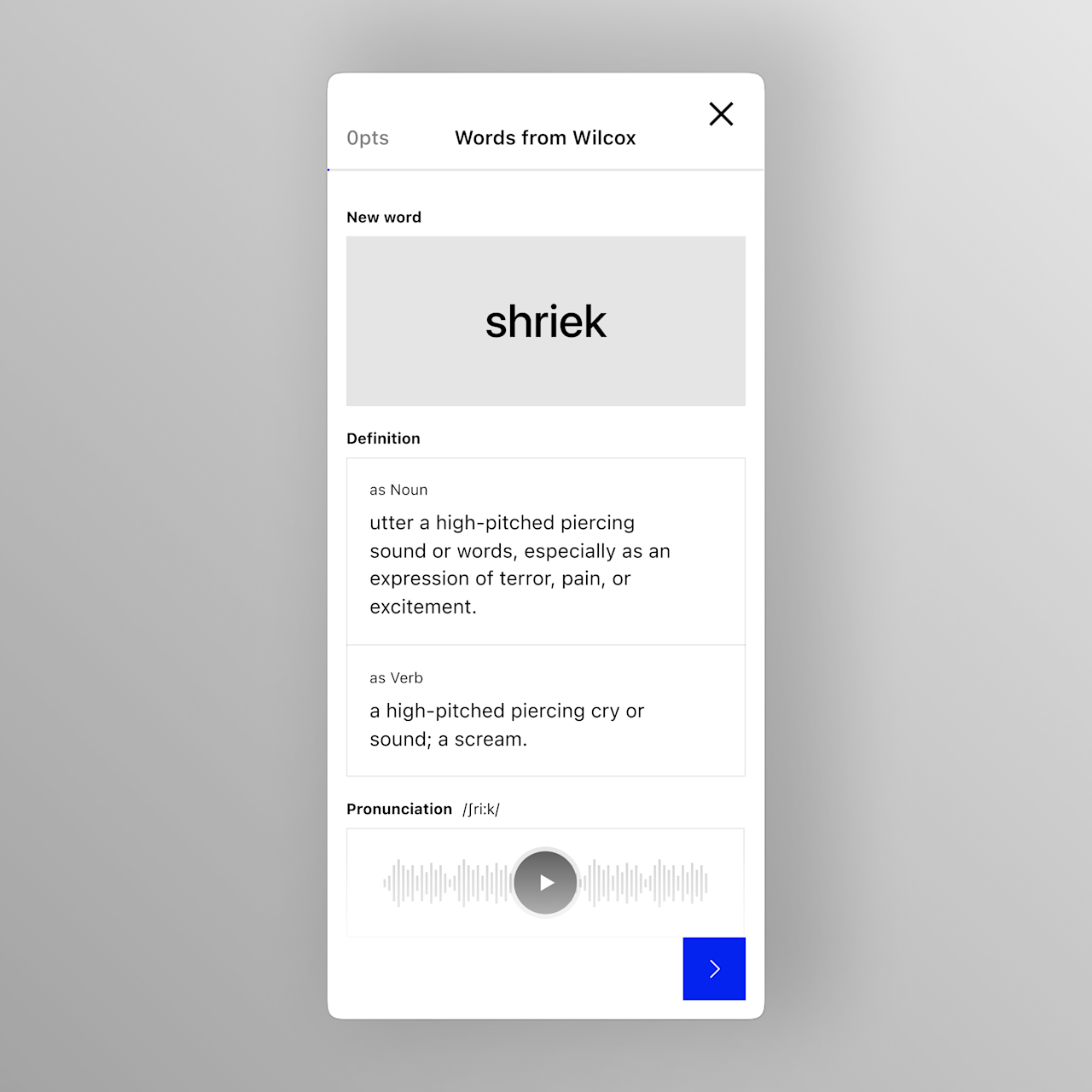
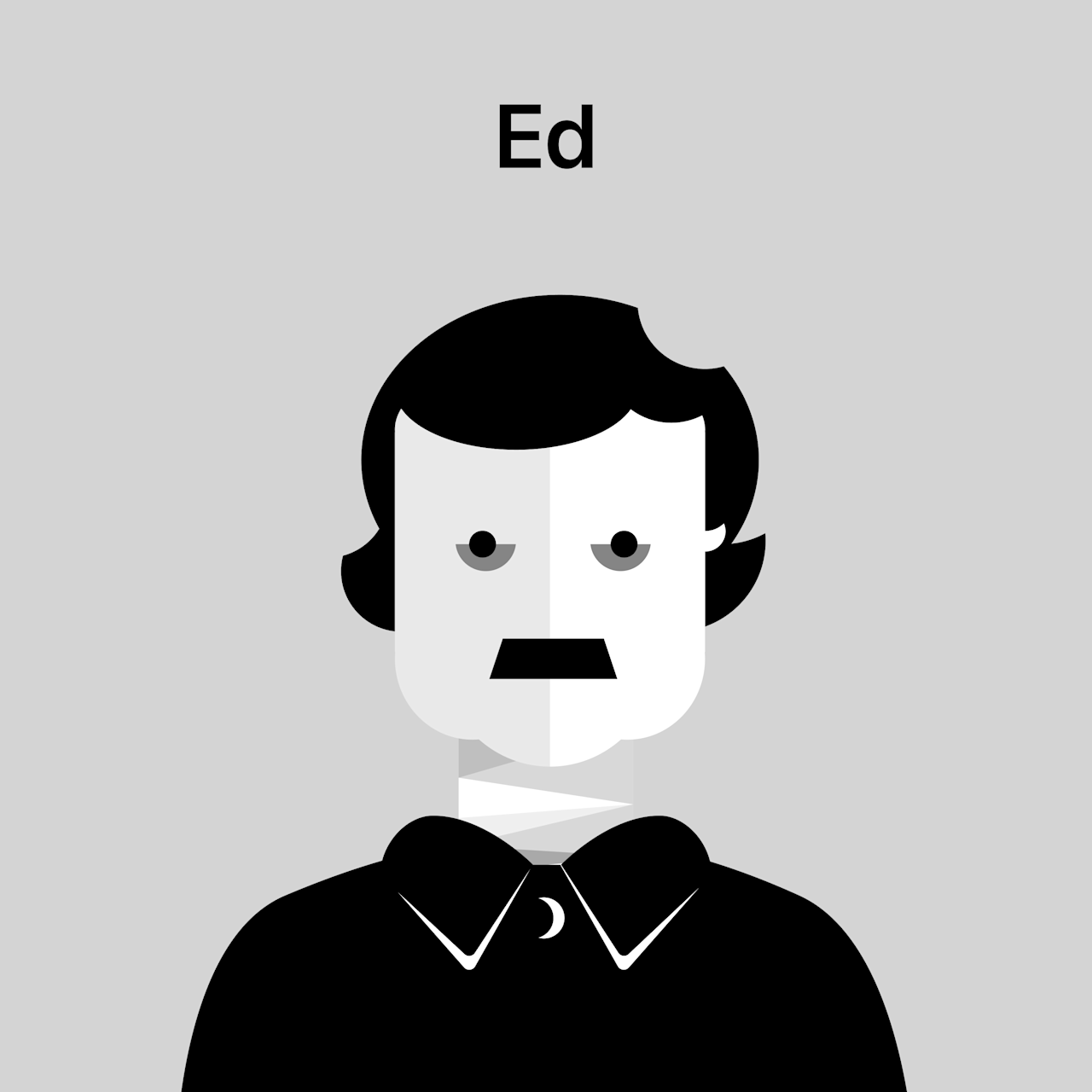
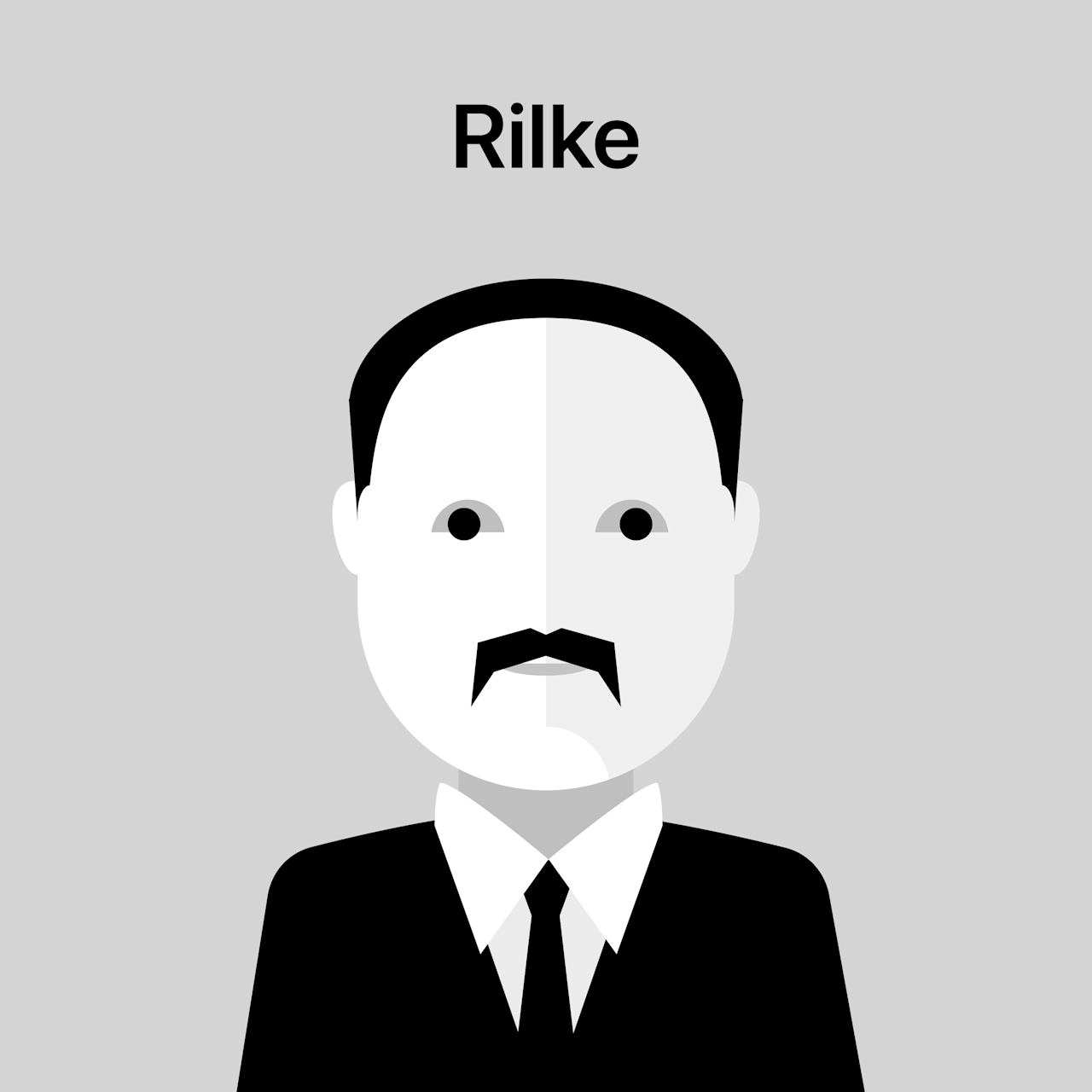
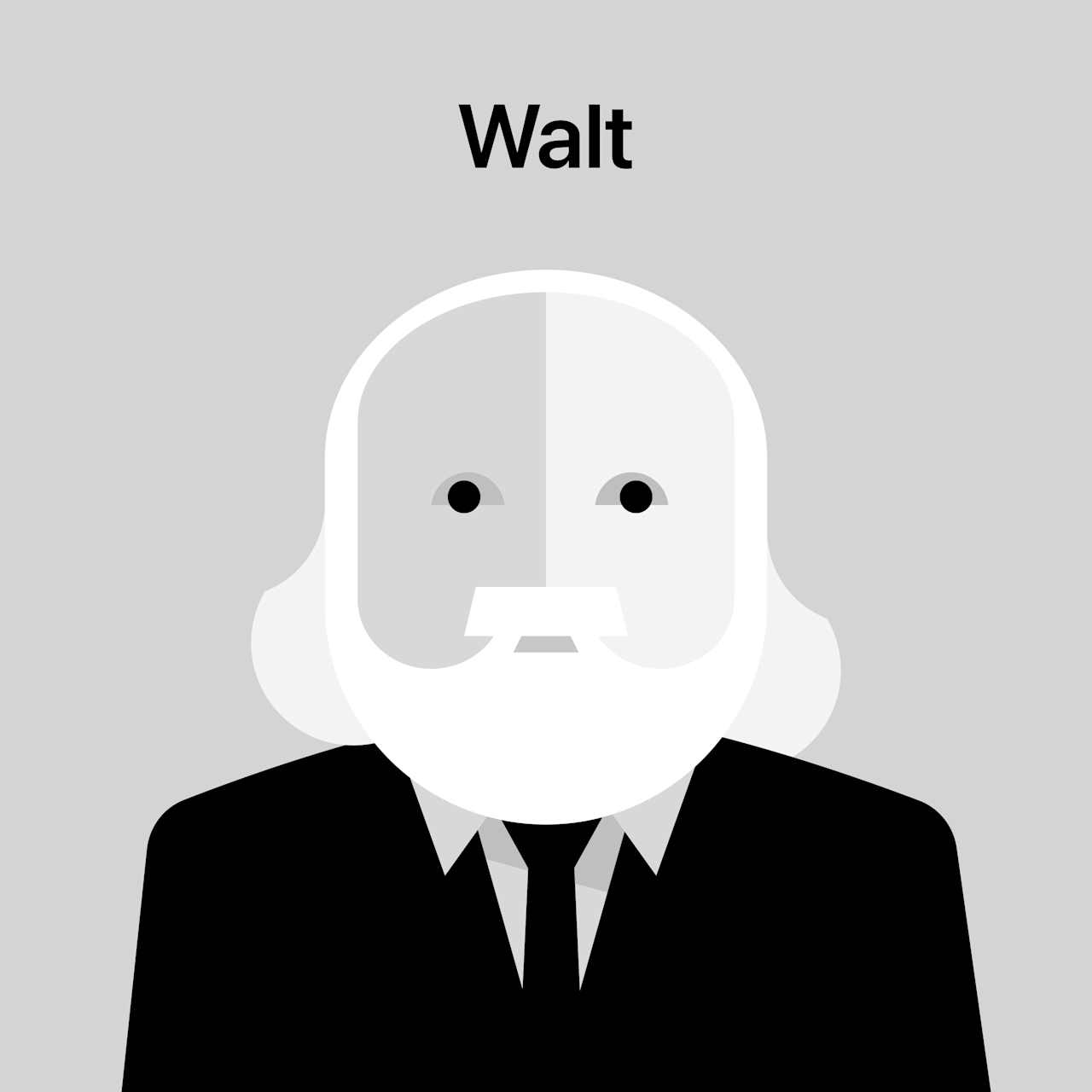
With Poetly, words are not learned in isolation. They are absorbed in context; rhythm and rhyme acting as natural memory tools. Using lines of poetry as mnemonic devices transforms vocabulary building into something more engaging and more memorable. The positioning is deliberate: not a tool for beginners, but for learners who want range, nuance, and a reason to keep going.




The gamification layer
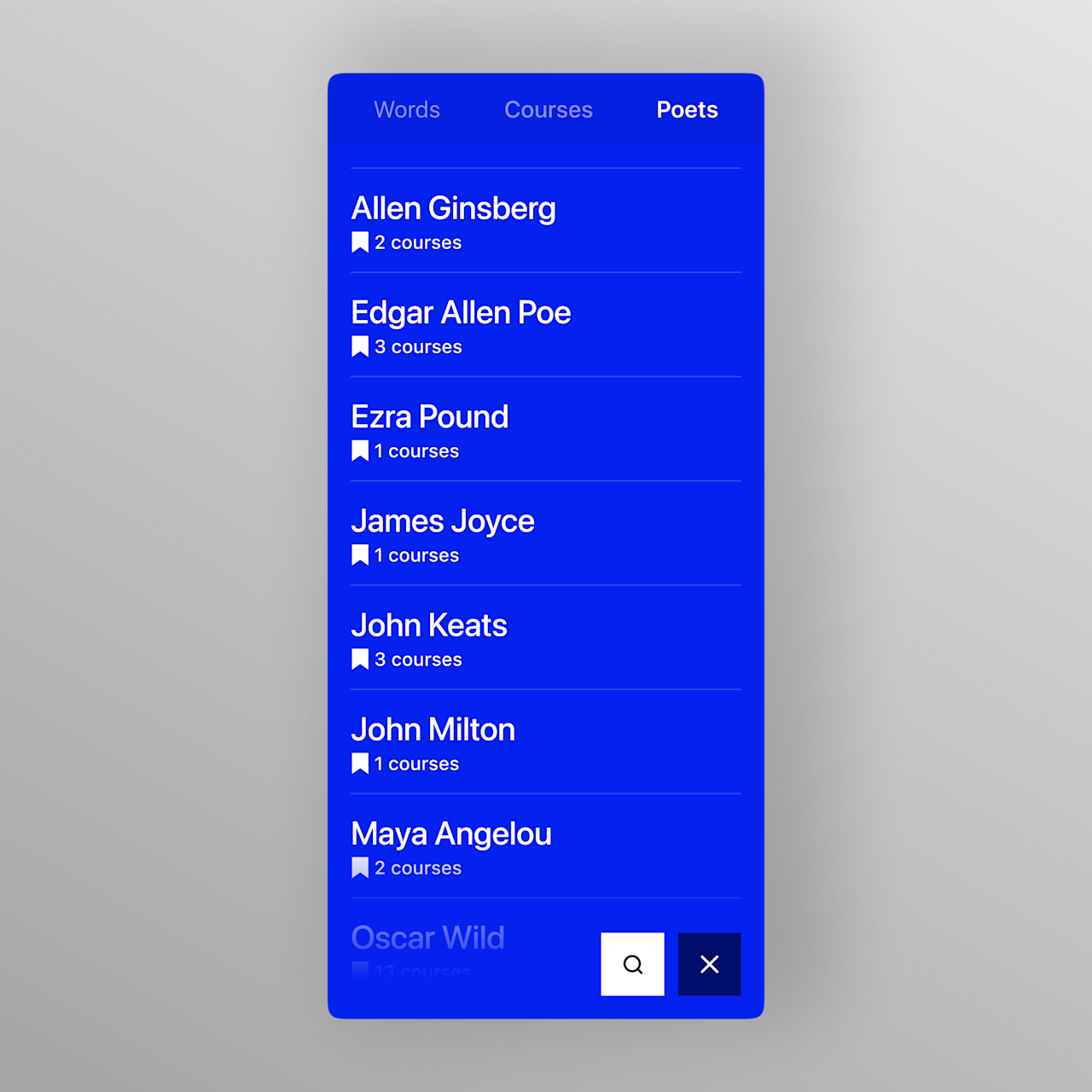
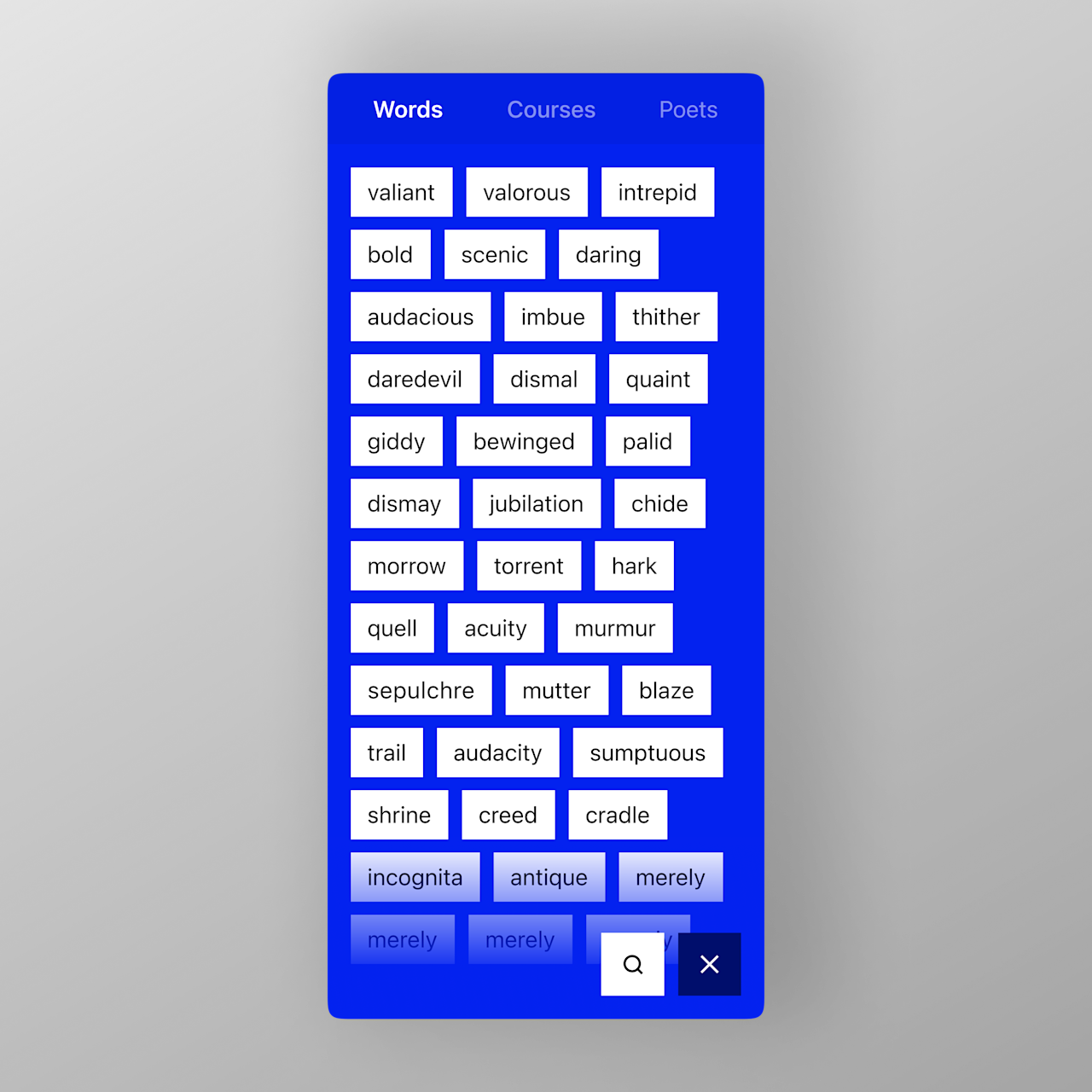
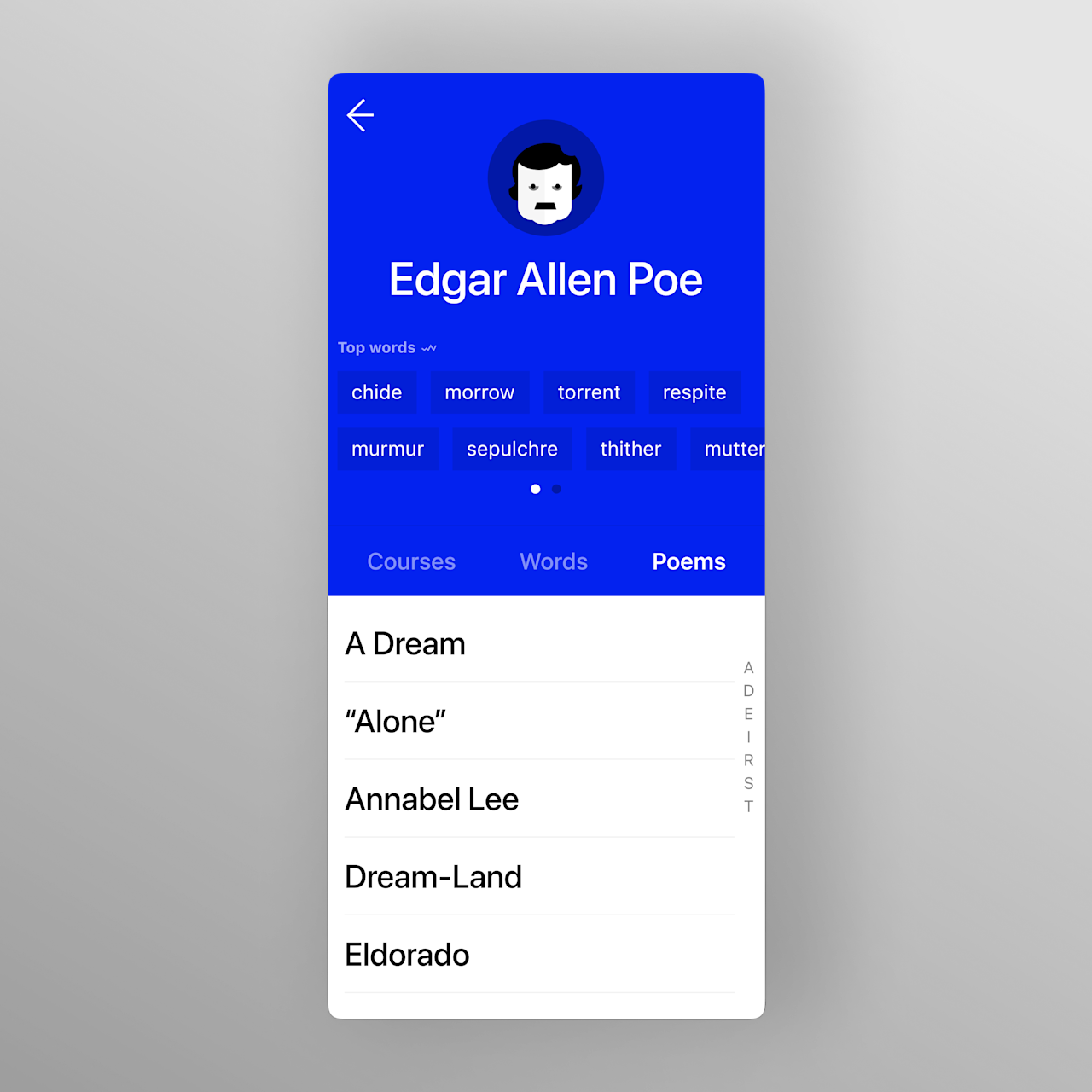
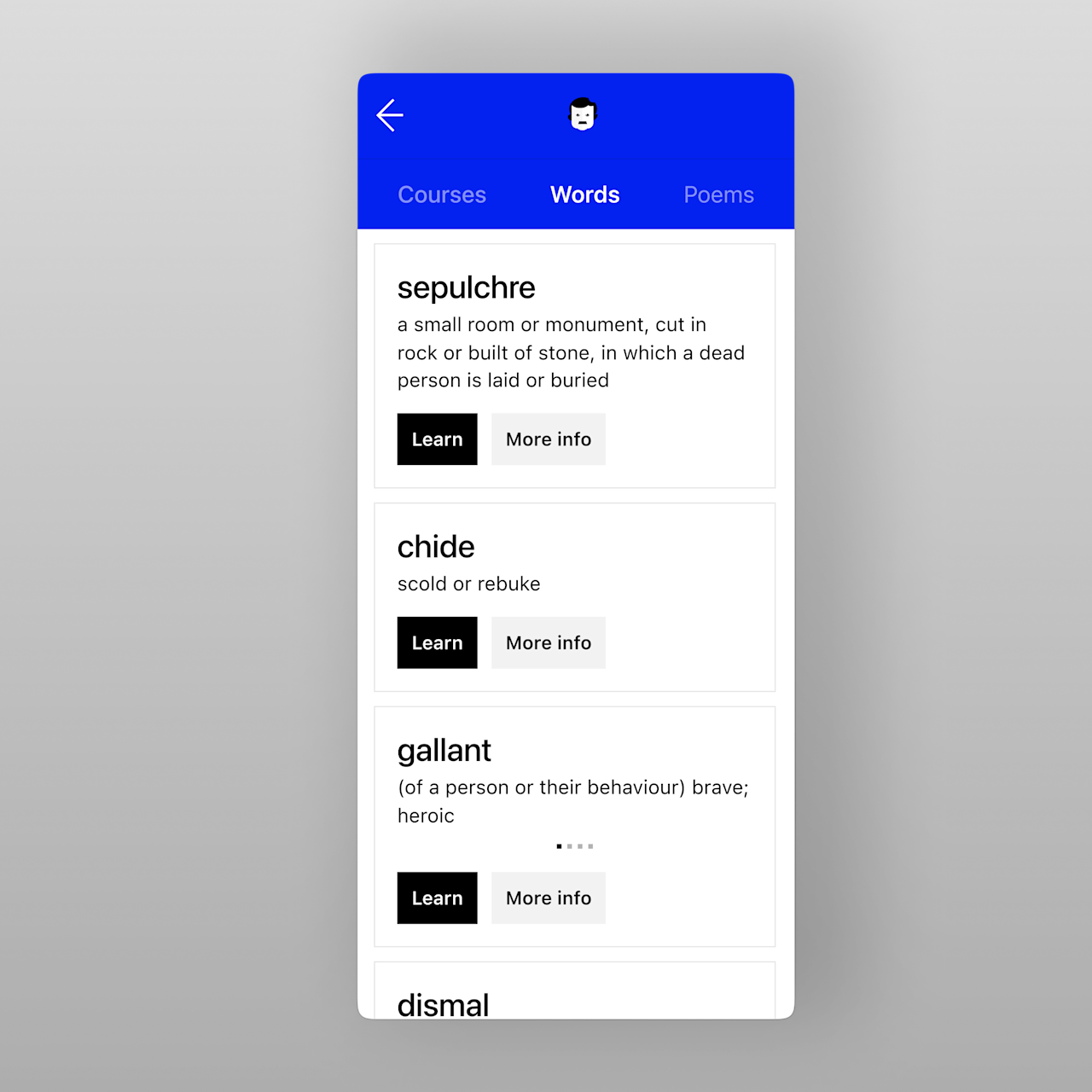
Read a poem, explore quotes, discover poets and collect words
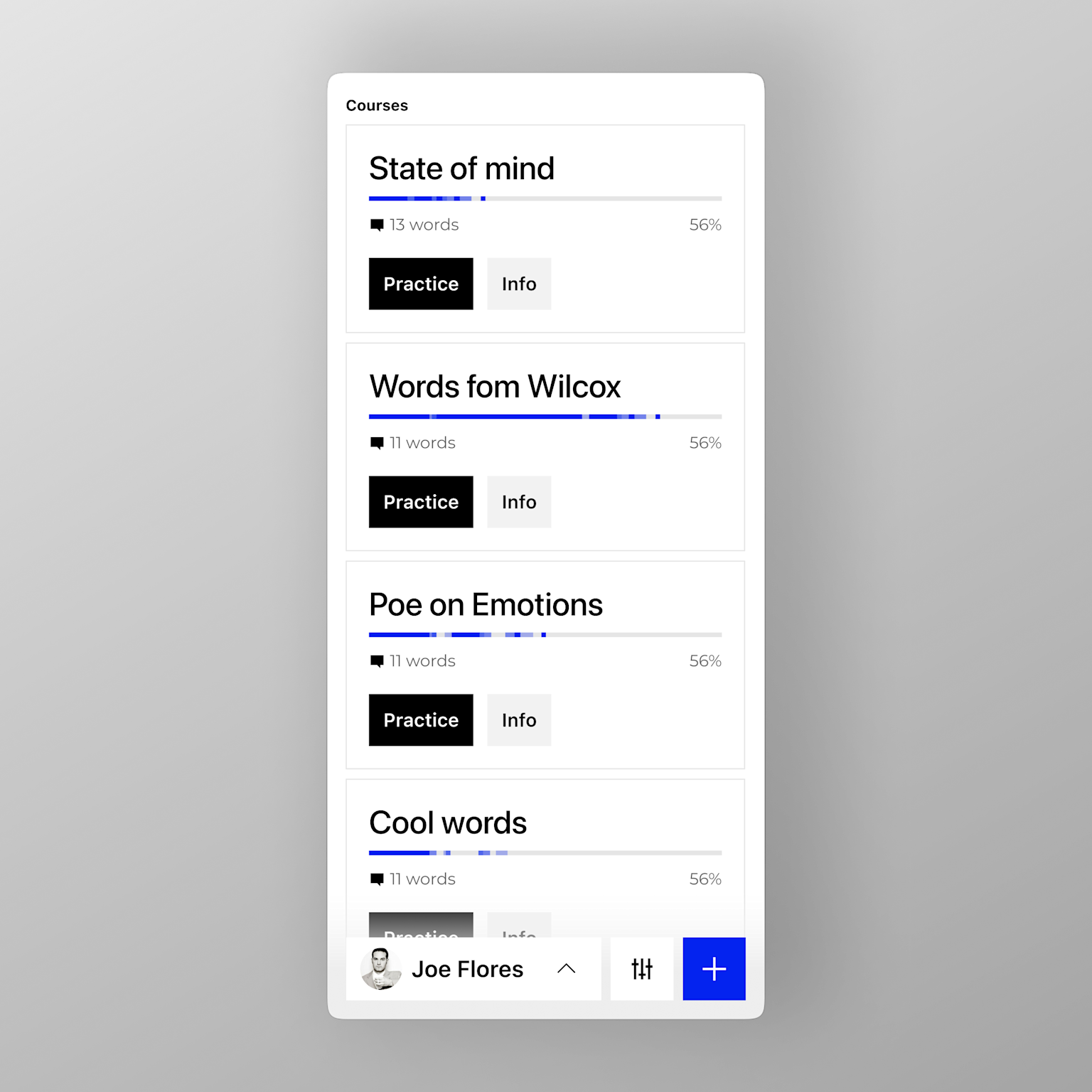
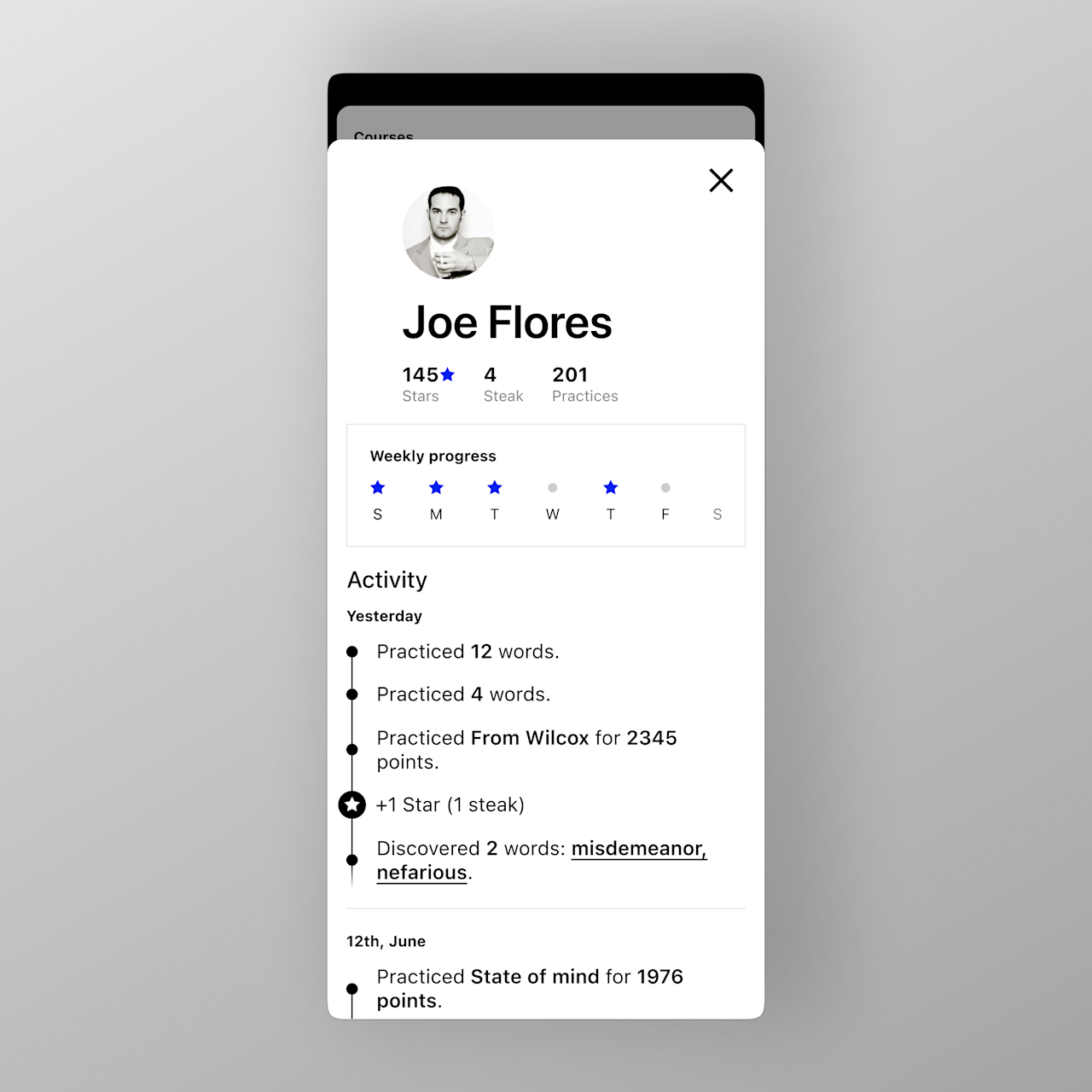
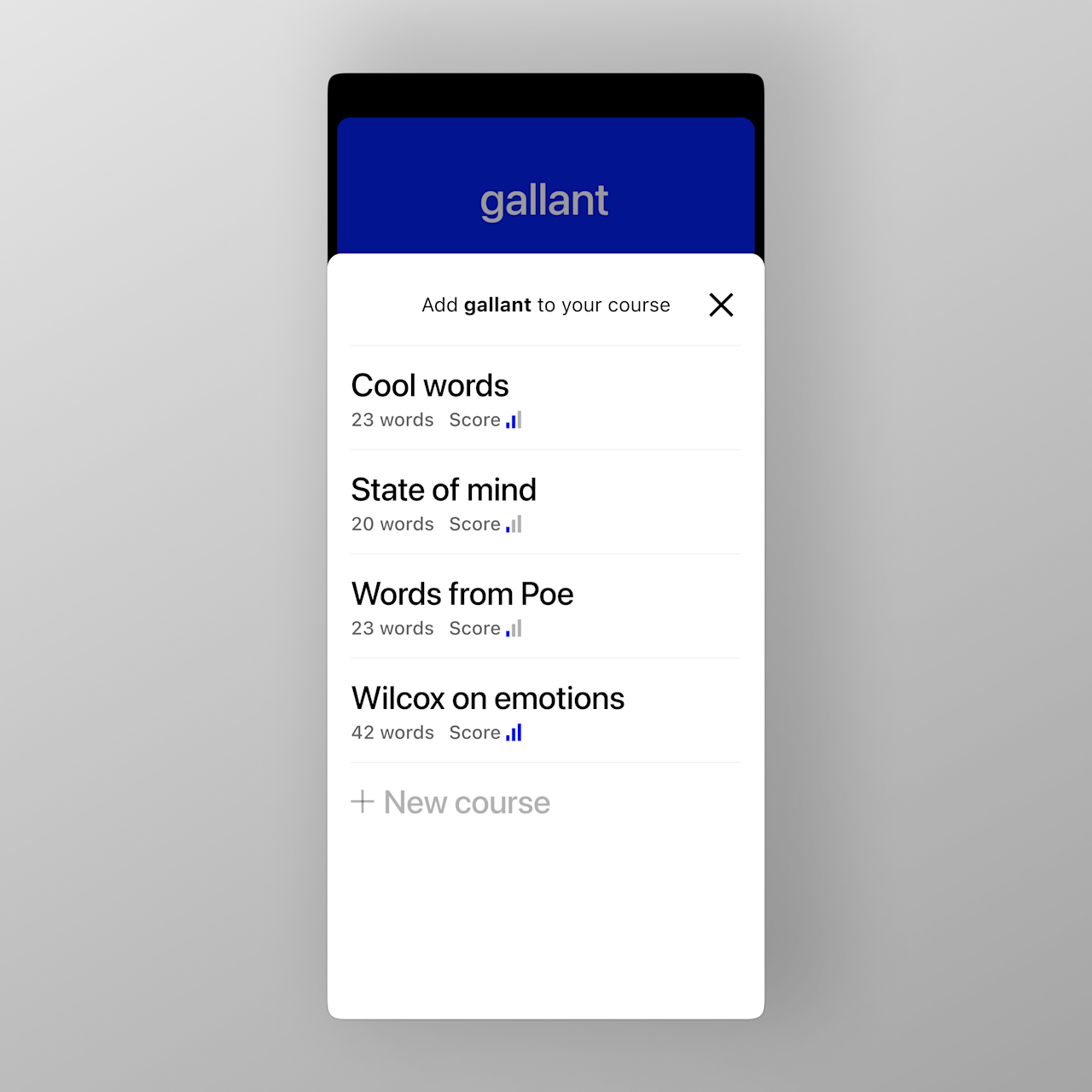
Poetly takes a self-directed approach to progress. Unlike traditional apps with rigid level progressions, the study path is open. Learners can browse poems and themes, dive into a poet, and collect the words they find along the way. Progress is tracked, feedback is provided, and small rewards keep the momentum going; without the pressure of streaks or failure states.
The exercise
Repetition, but make it poetic
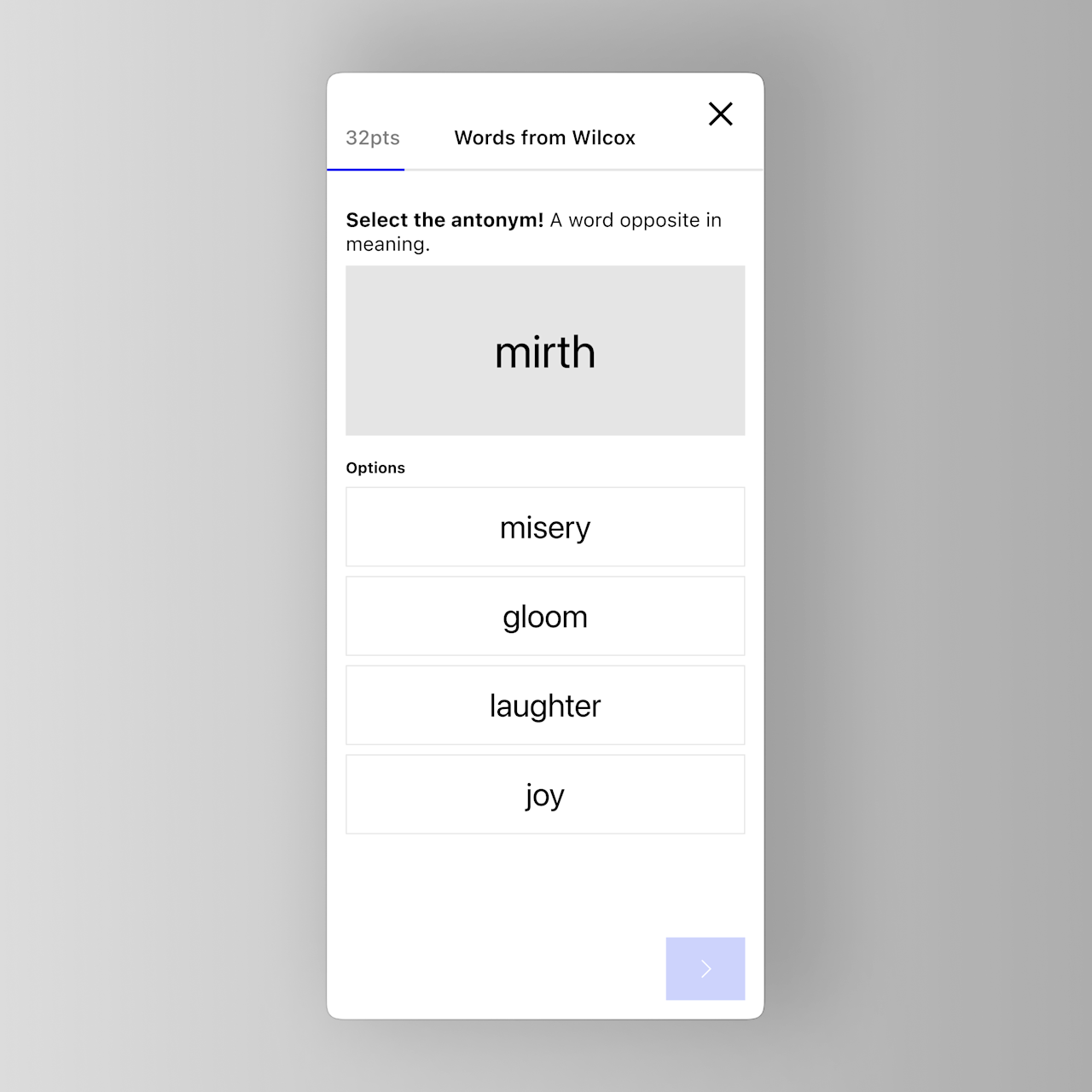
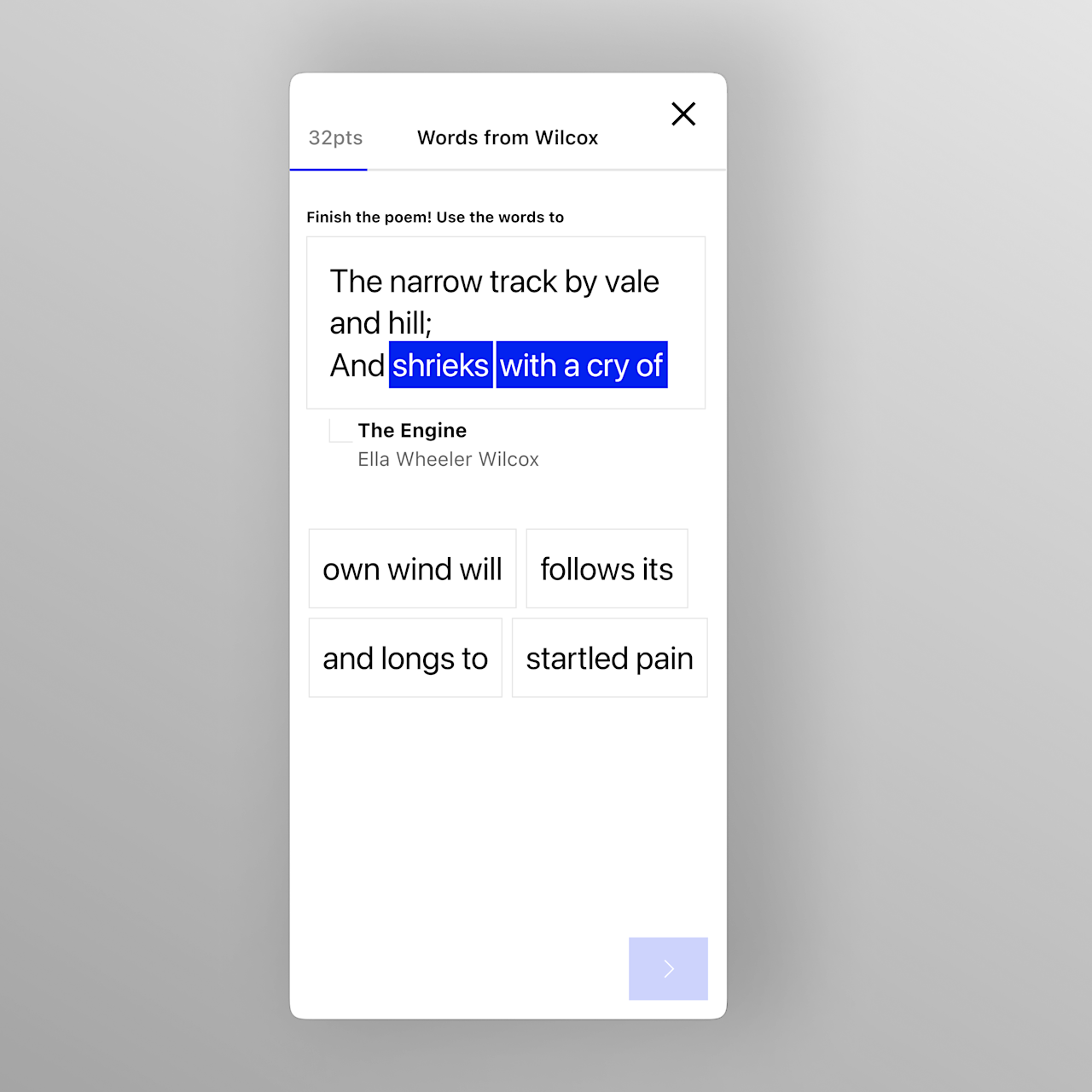
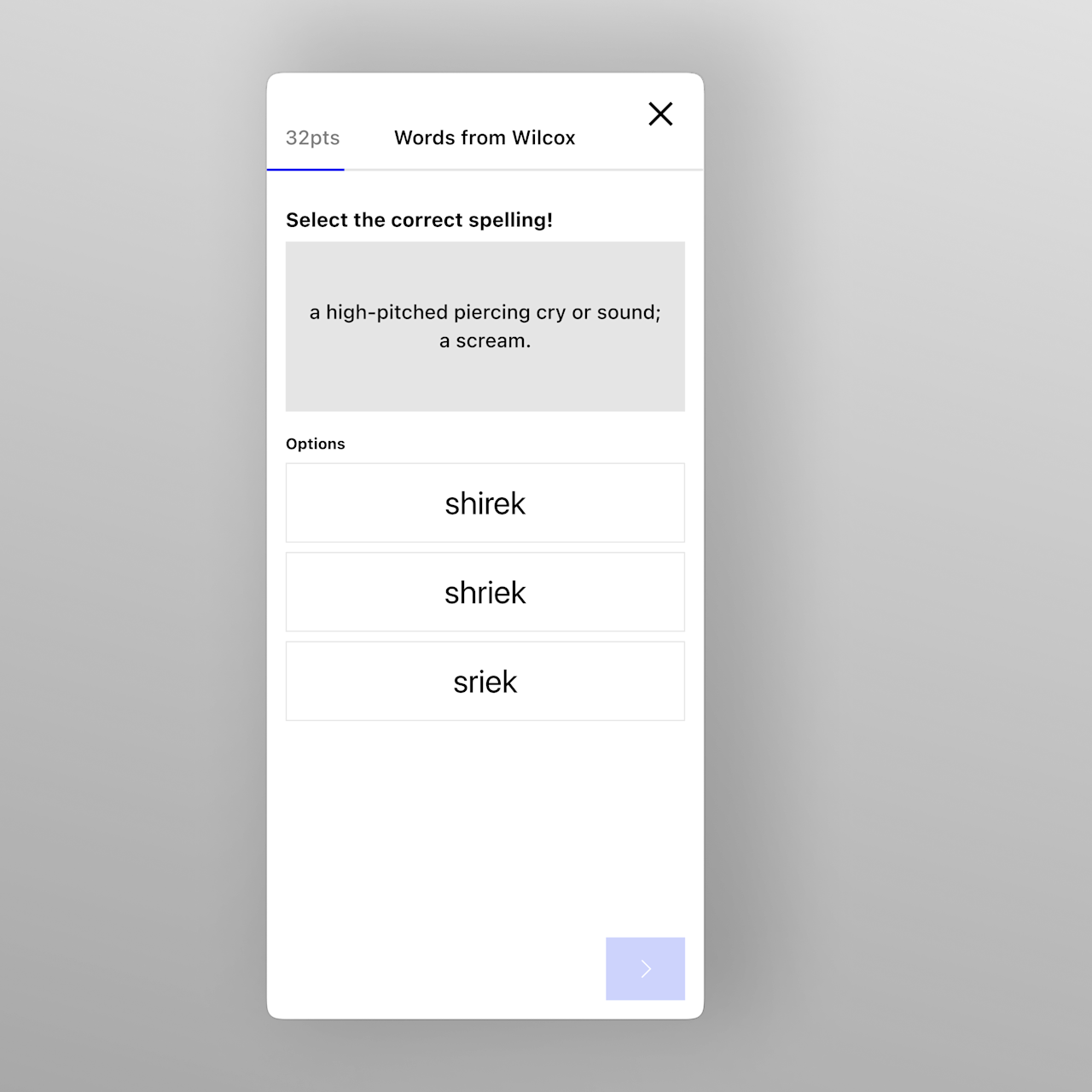
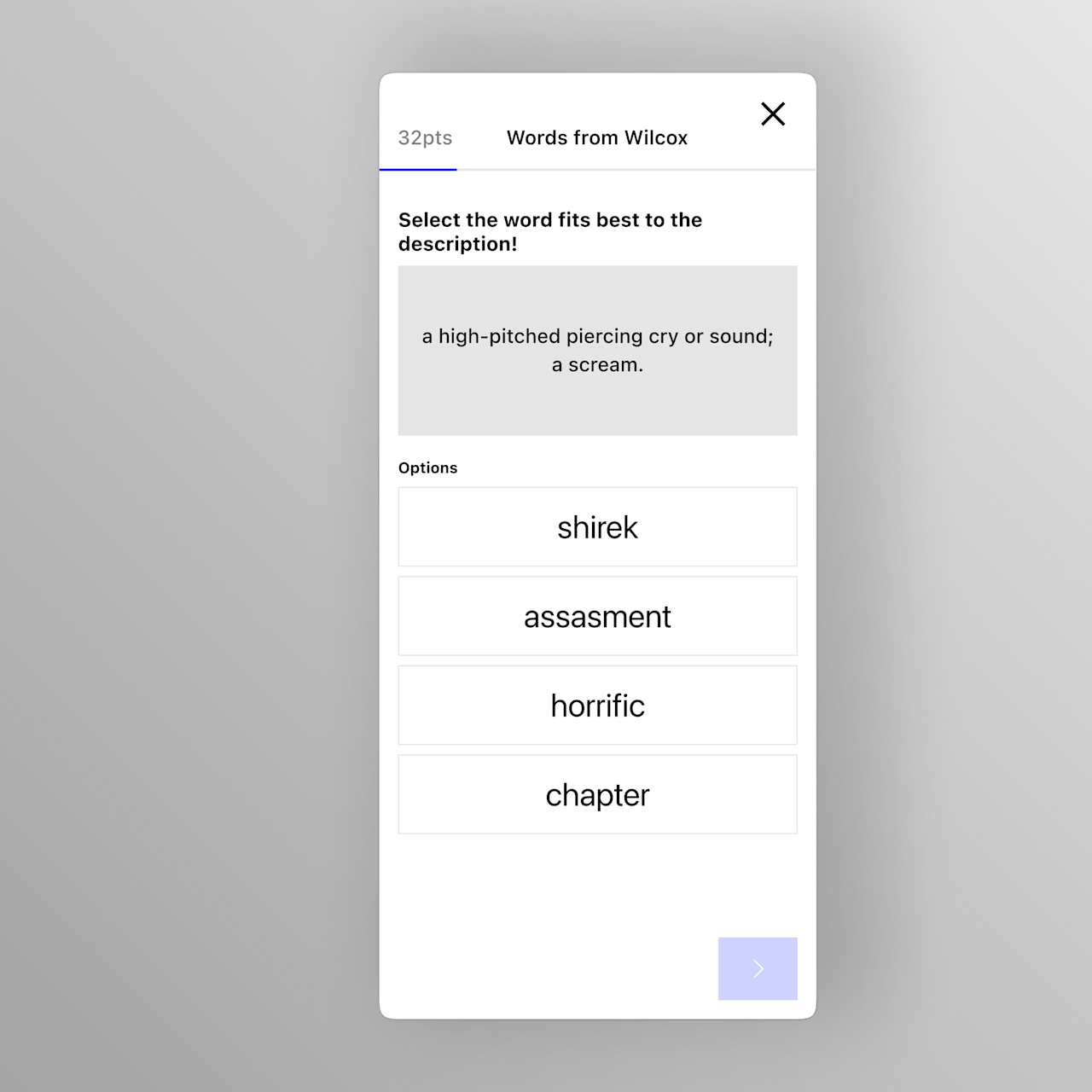
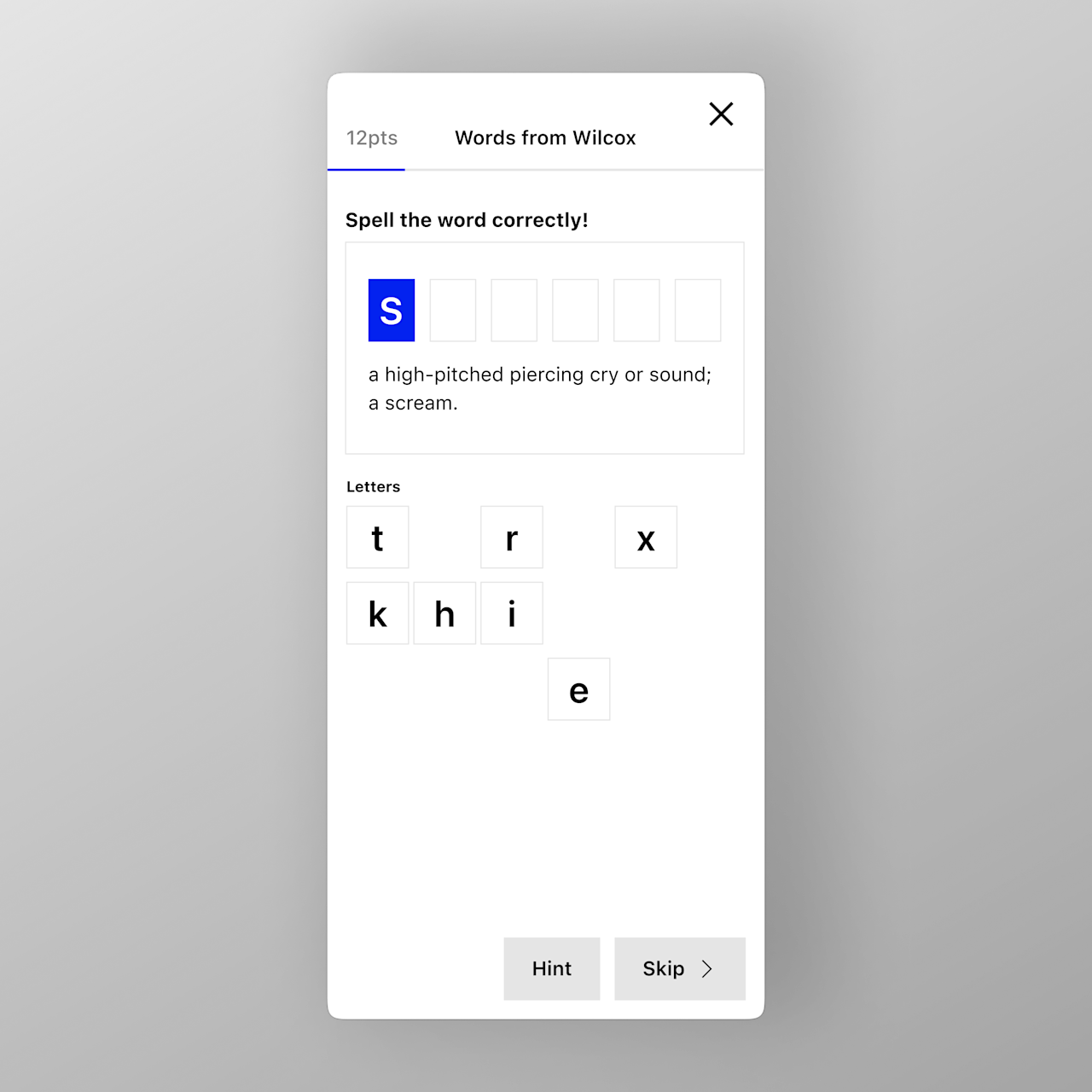
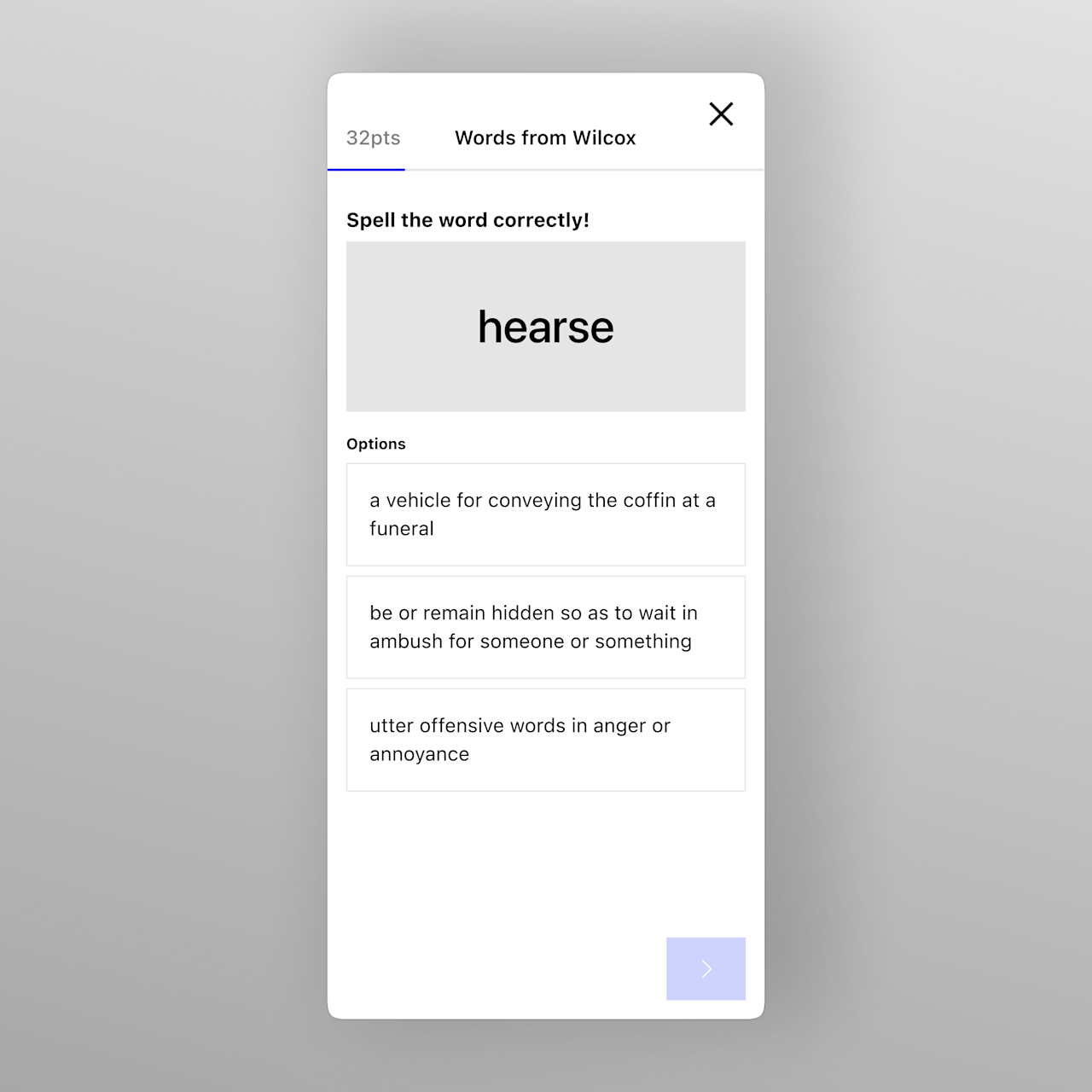
At the core of the app is the idea of using poems as memory tools. Every session introduces new words and reinforces them through repetition across different contexts: word recognition, spaced repetition, matching pairs, completing poetic lines, arranging verses in order. Exercises are varied enough to stay engaging, structured enough to build real retention.