For smile's sake
Meet the toothbrush that makes taking care of your smile effortless.
Meet the toothbrush that makes taking care of your smile effortless.
- How do you design a smart toothbrush? (Thought process)
The observation
A daily habit with no feedback loop and a waste problem
Toothbrushes are an environmental problem nobody talks about much. Composite construction, mixed plastics, sometimes metal; almost nothing about them is designed to be taken apart or recycled. Add toothpaste tubes, mouthwash, and floss and the waste adds up fast. 264 million brushes are discarded in the UK alone every year. The product gives people no reason to think about this, so they do not.
The personal problem runs alongside it. People worry about their teeth; tartar, discolouration, sensitivity. They brush because they know they should. But there is no signal after the fact. No way to know if you pressed too hard, skipped a section, or did anything that will actually prevent the problems you are anxious about. The habit exists. The feedback does not.
That is where connected technology has something real to offer. Not a gadget with a companion app bolted on, but something that closes the gap between doing the habit and knowing whether it worked. Learn more about how I gained this insight.
The industrial design
Form follows function
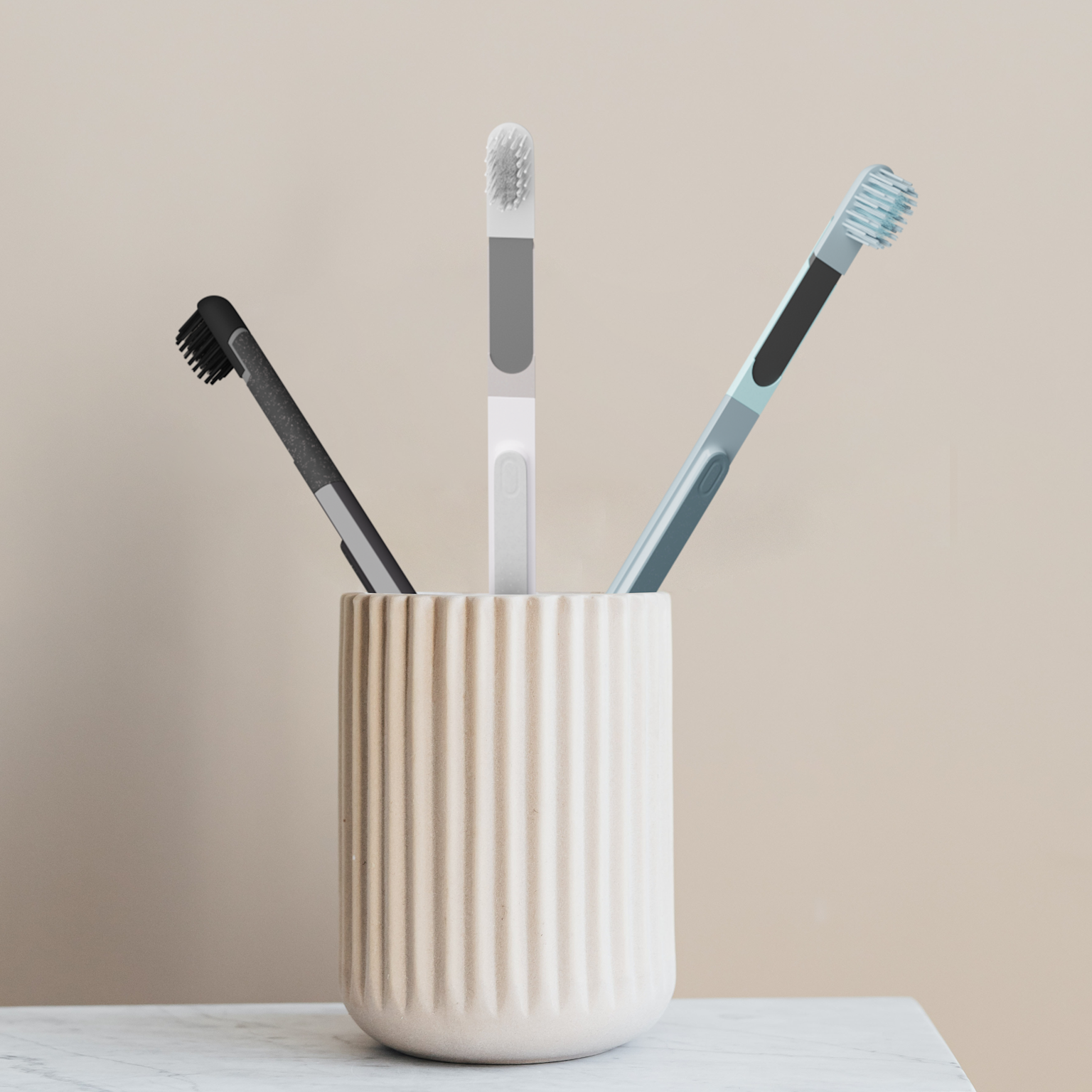
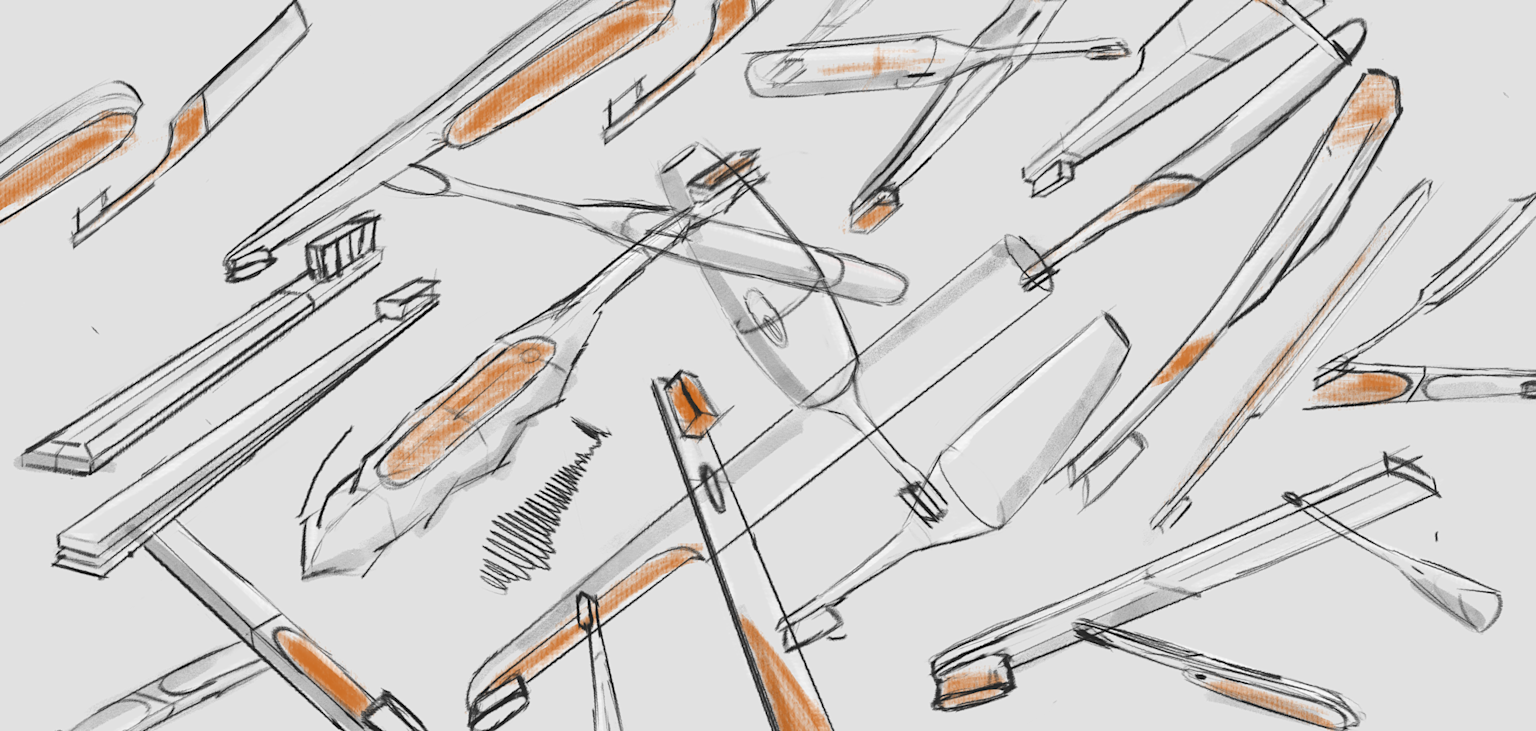
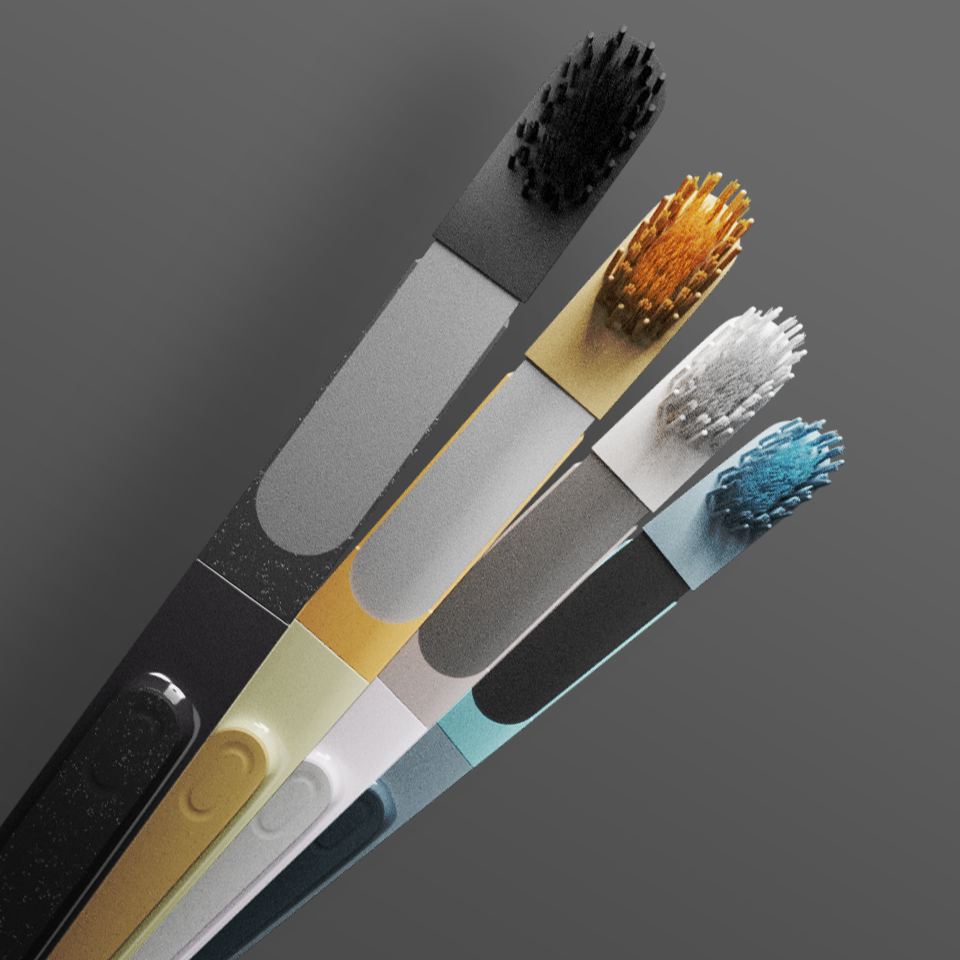
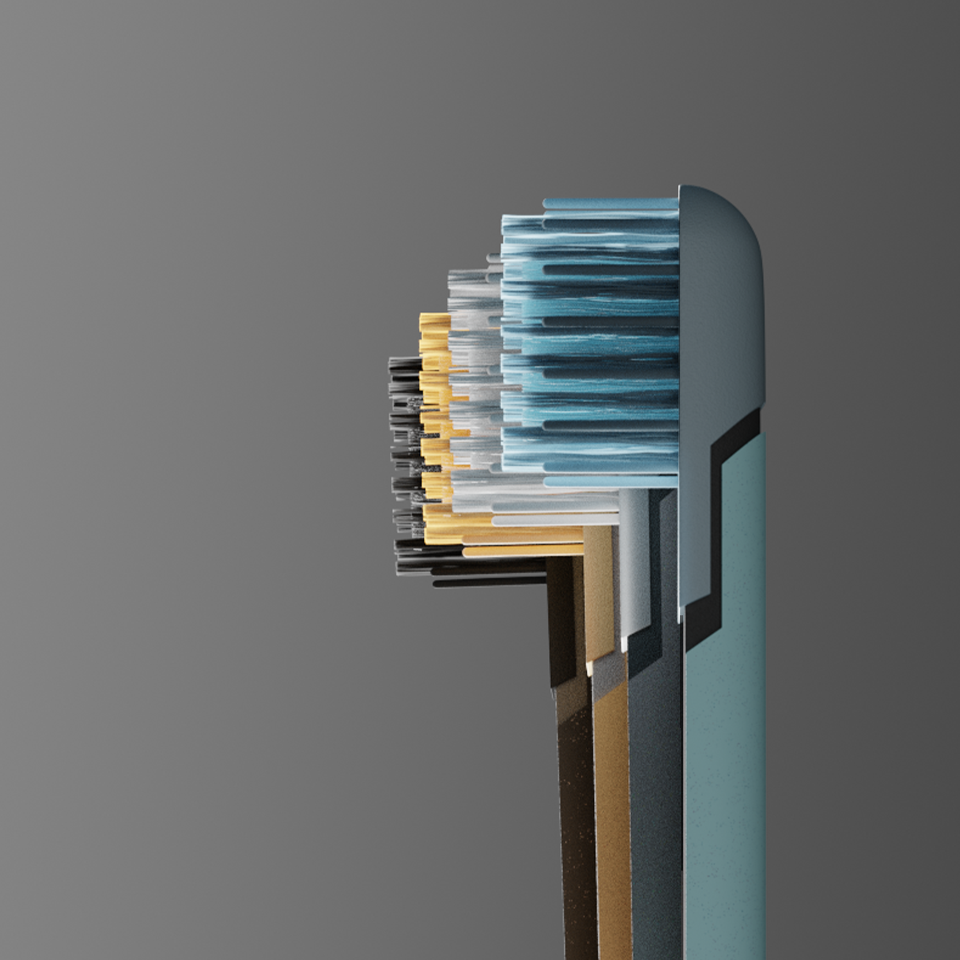
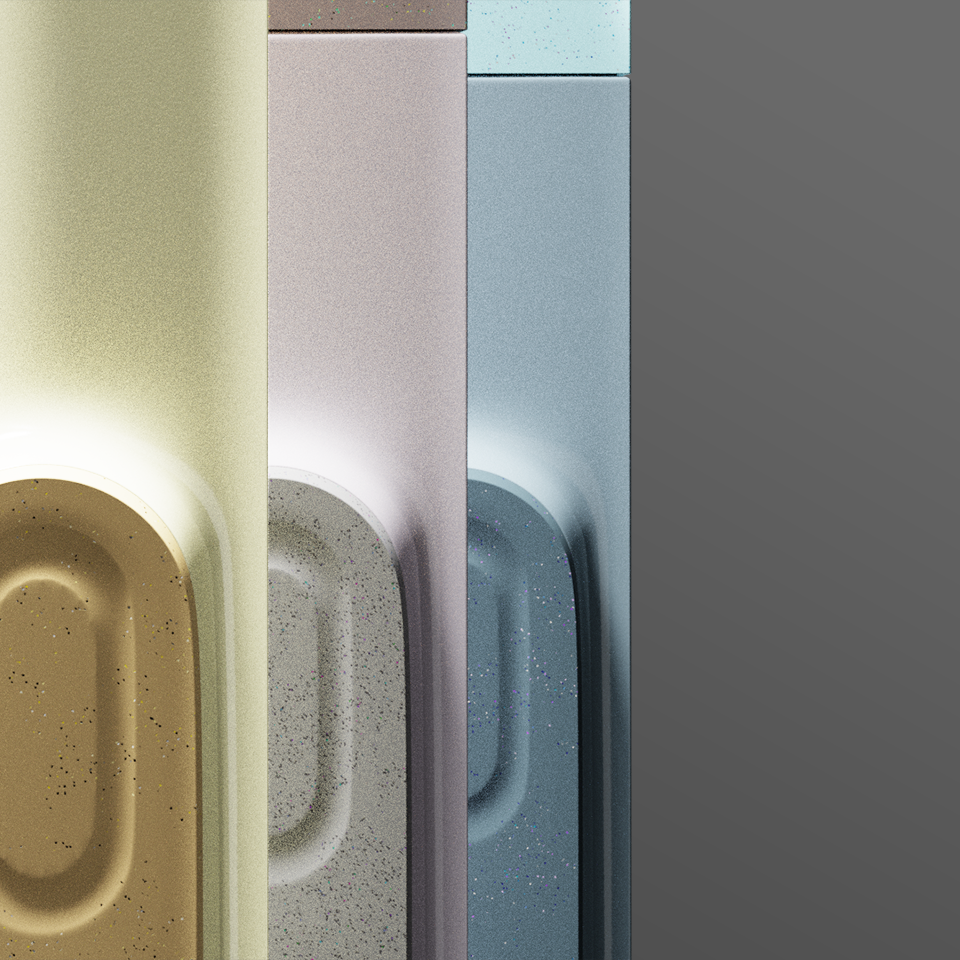
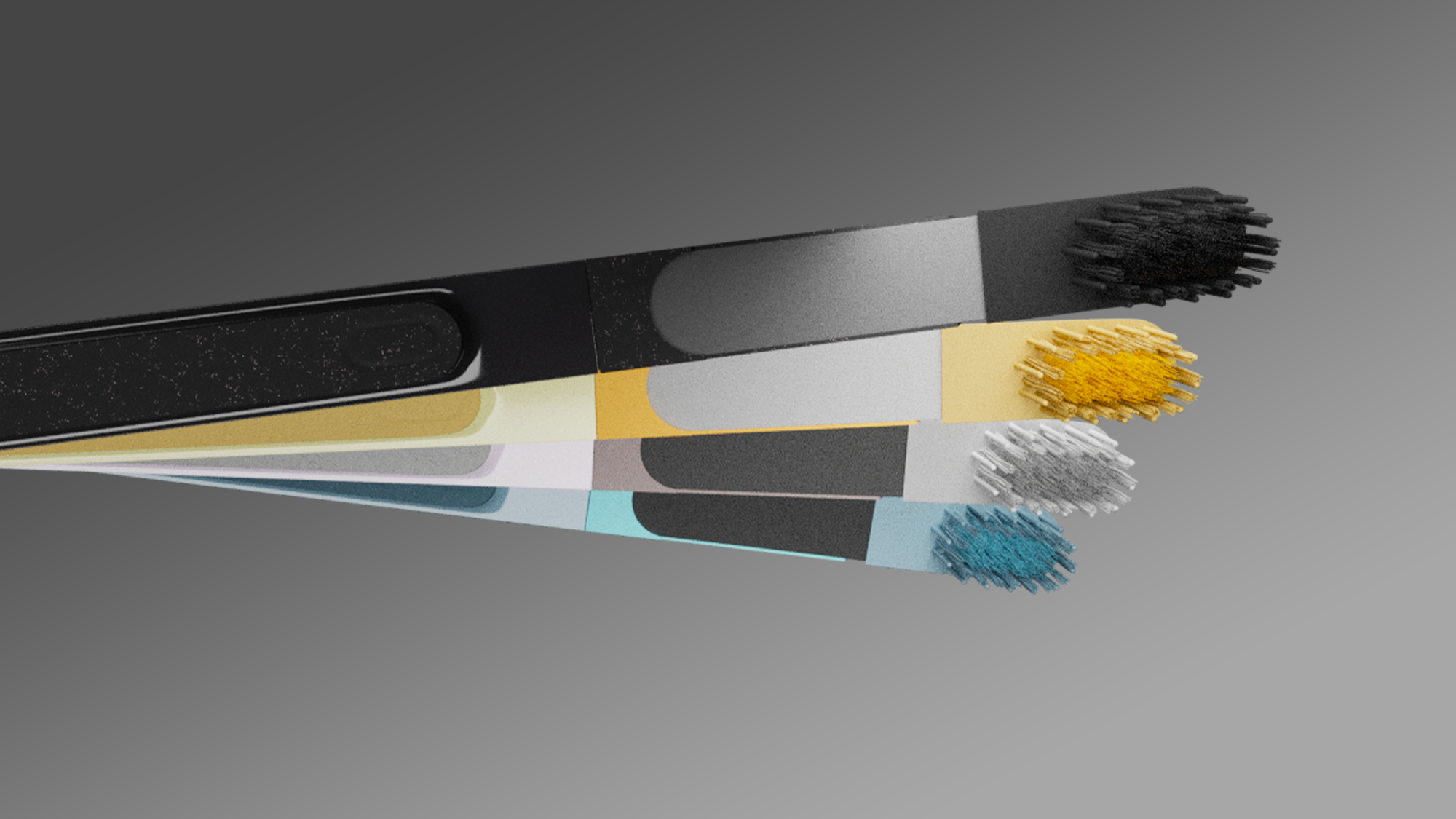
The toothbrush is shaped around how a hand actually holds and moves it. Every curve and grip angle comes from the function. Materials chosen for what they do. The look follows from that rather than the other way around.
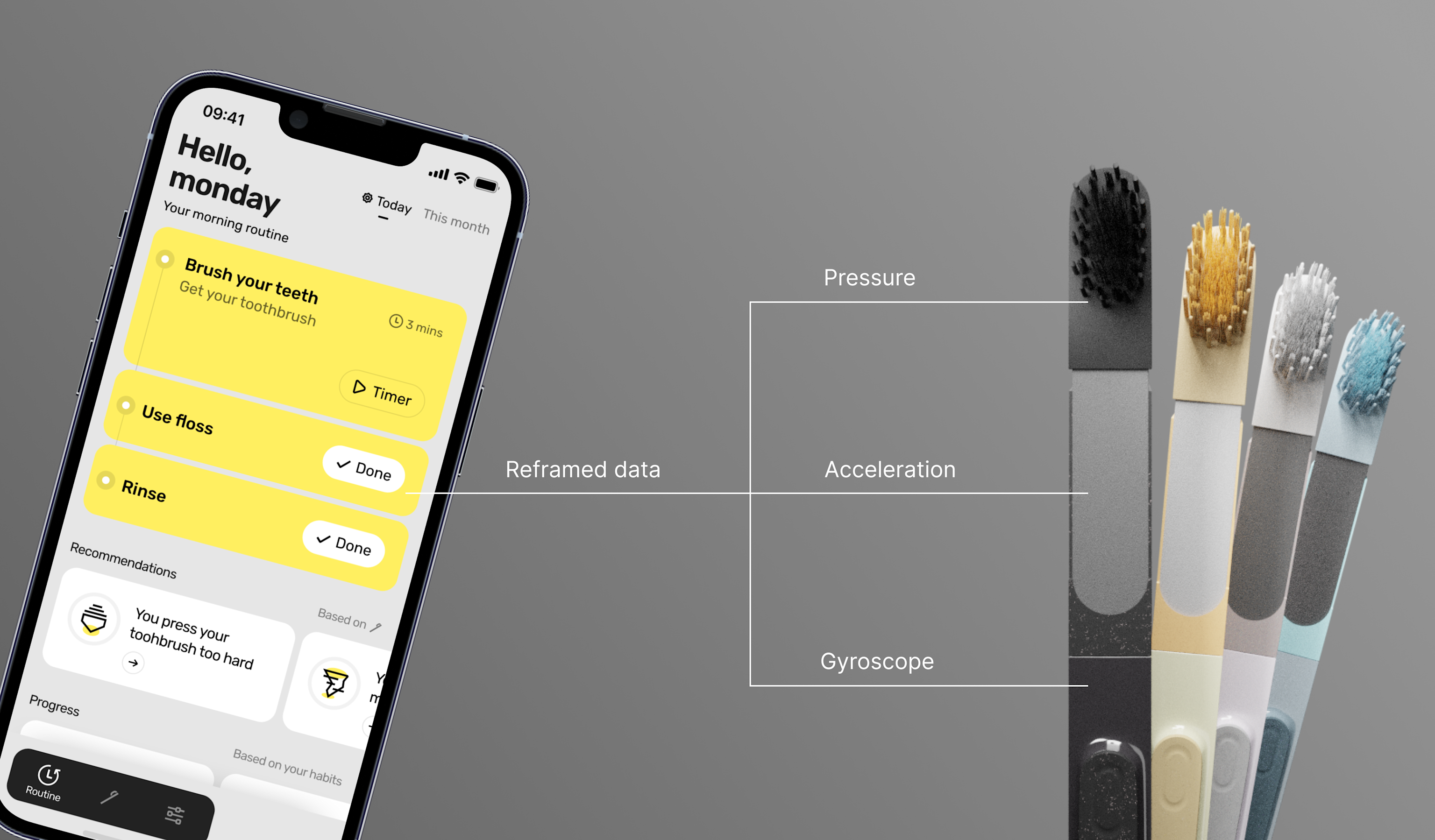
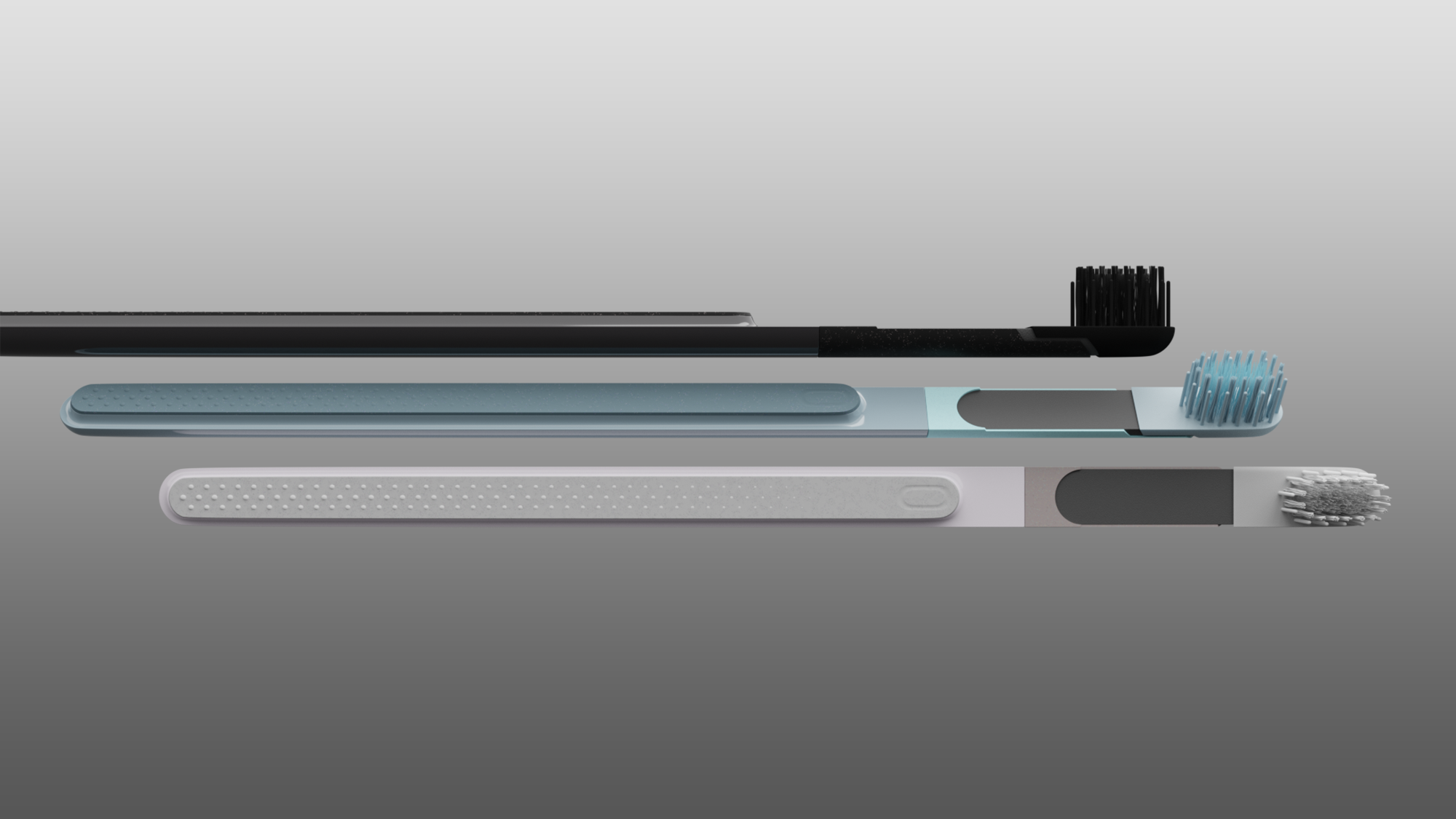
The sensors in the handle are what could make the feedback real, if the engineering delivers. An accelerometer for movement speed, a gyroscope for rotation, pressure sensitivity for how hard the brush is pushed against teeth. The bet is that those inputs, read correctly, tell you something useful about your brushing rather than just recording that it happened.
The environment
Sustainability should be the default
Sustainable design is not just about what a product is made of. It is about how long it lasts and what happens when parts wear out. Replaceable heads. Degradable materials where composite construction used to be the only option. A handle designed to outlast the bristles by years.
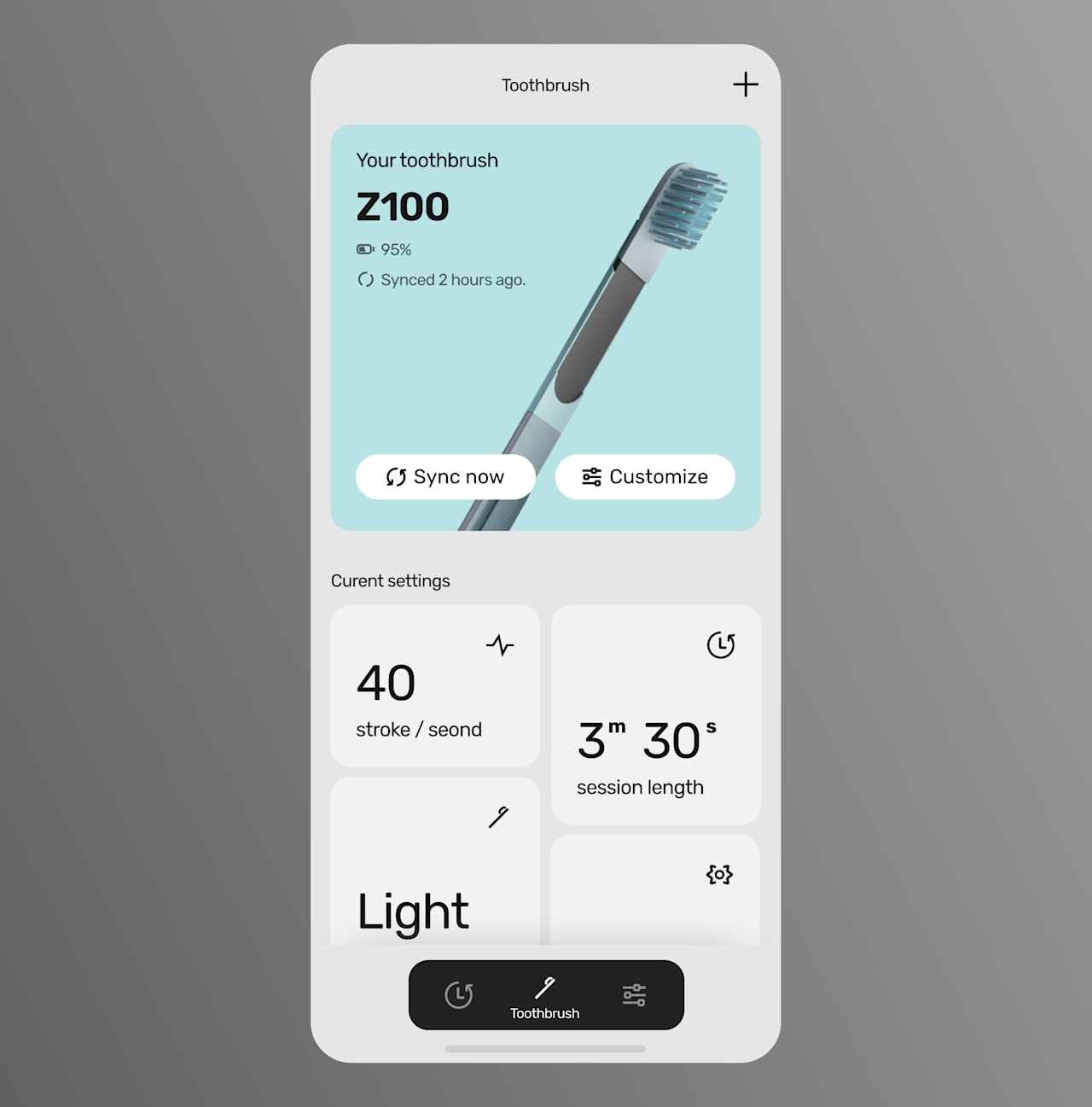
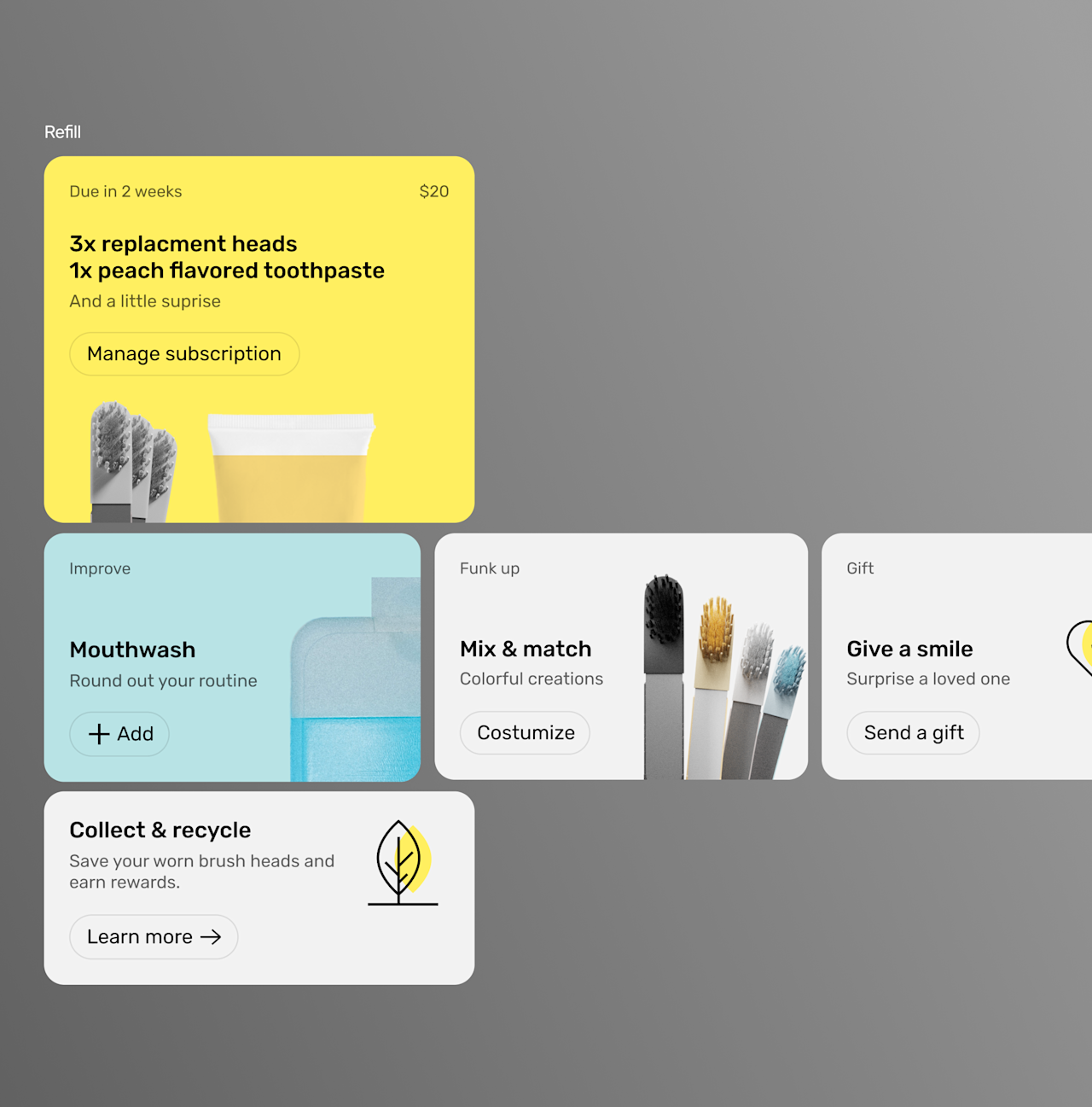
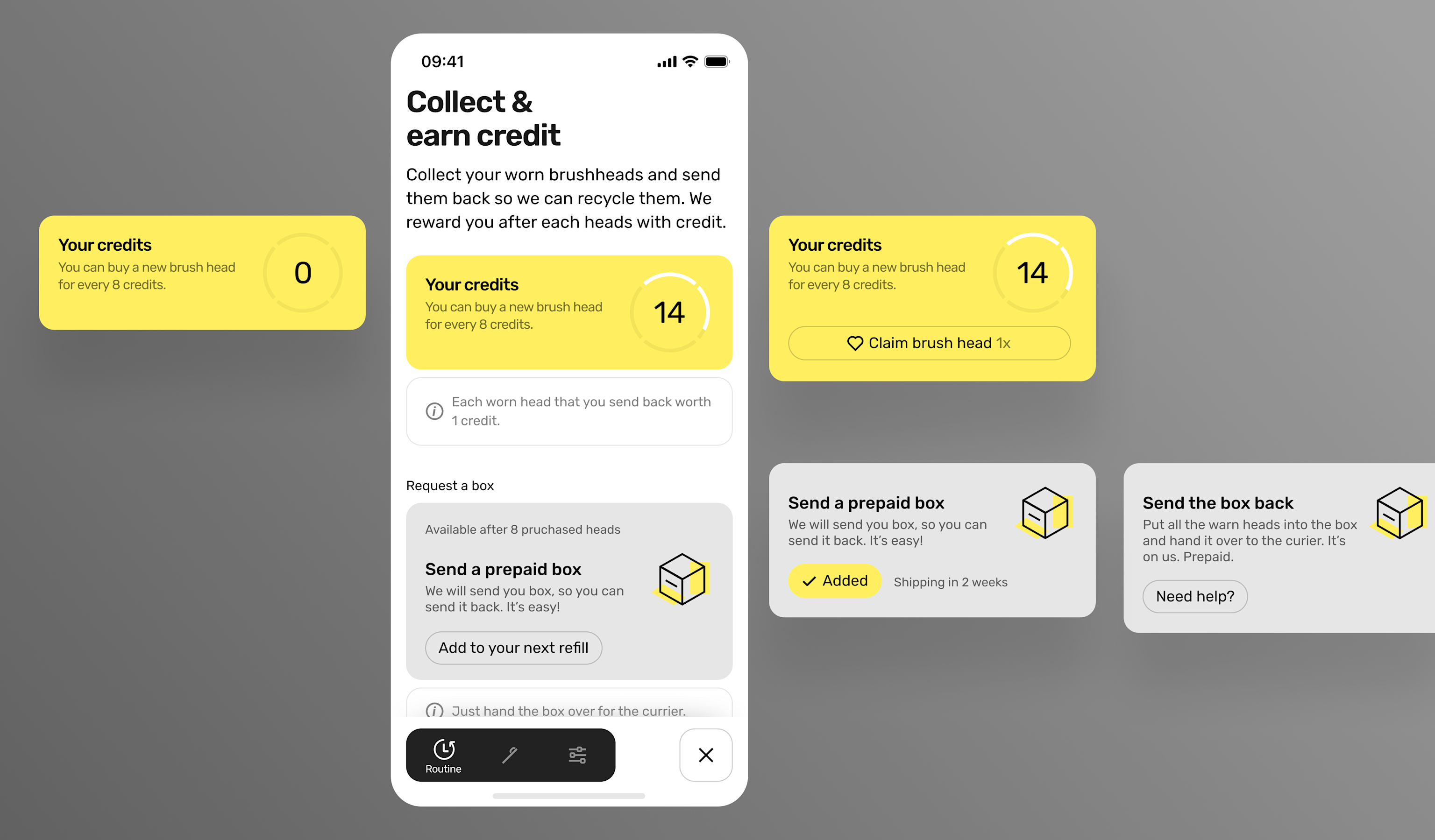
Connectivity pulls its weight here. The app tracks when the brush head needs replacing and prompts a refill before it stops working properly. Returning old heads earns credits toward the next order. The sustainable behaviour becomes part of using the product rather than something extra the user has to remember to care about.
The app
Smarter brushing, not more brushing
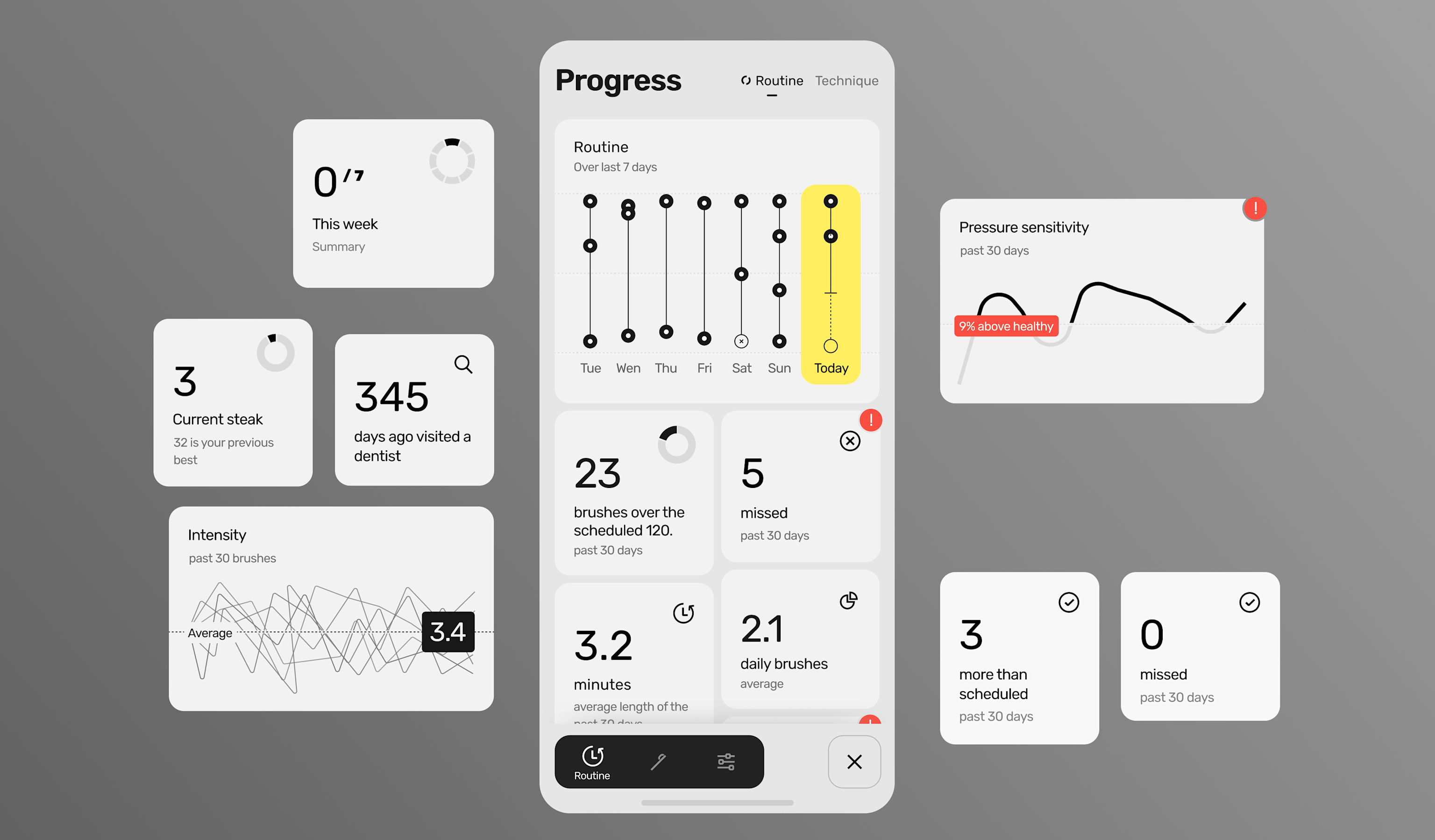
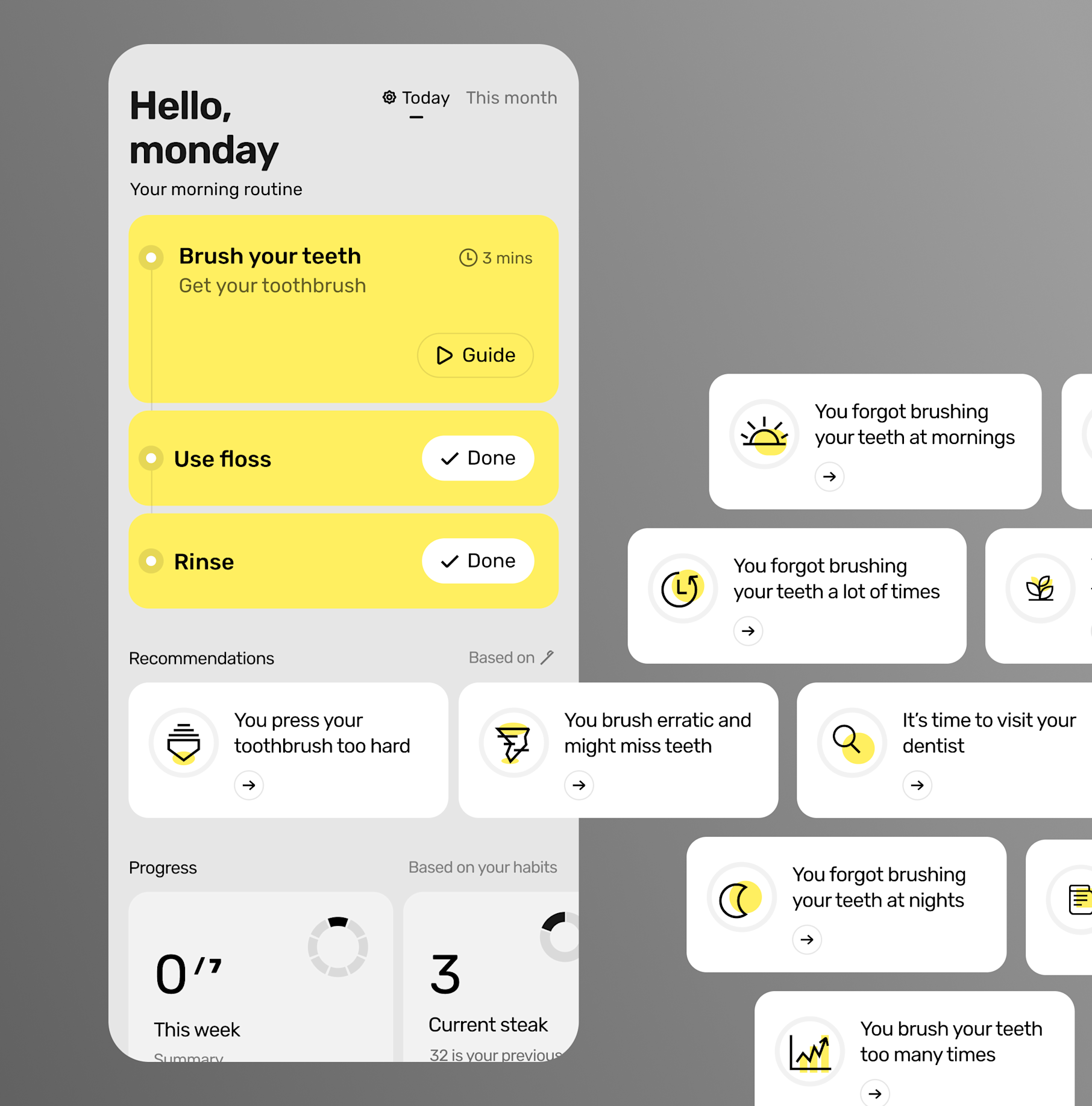
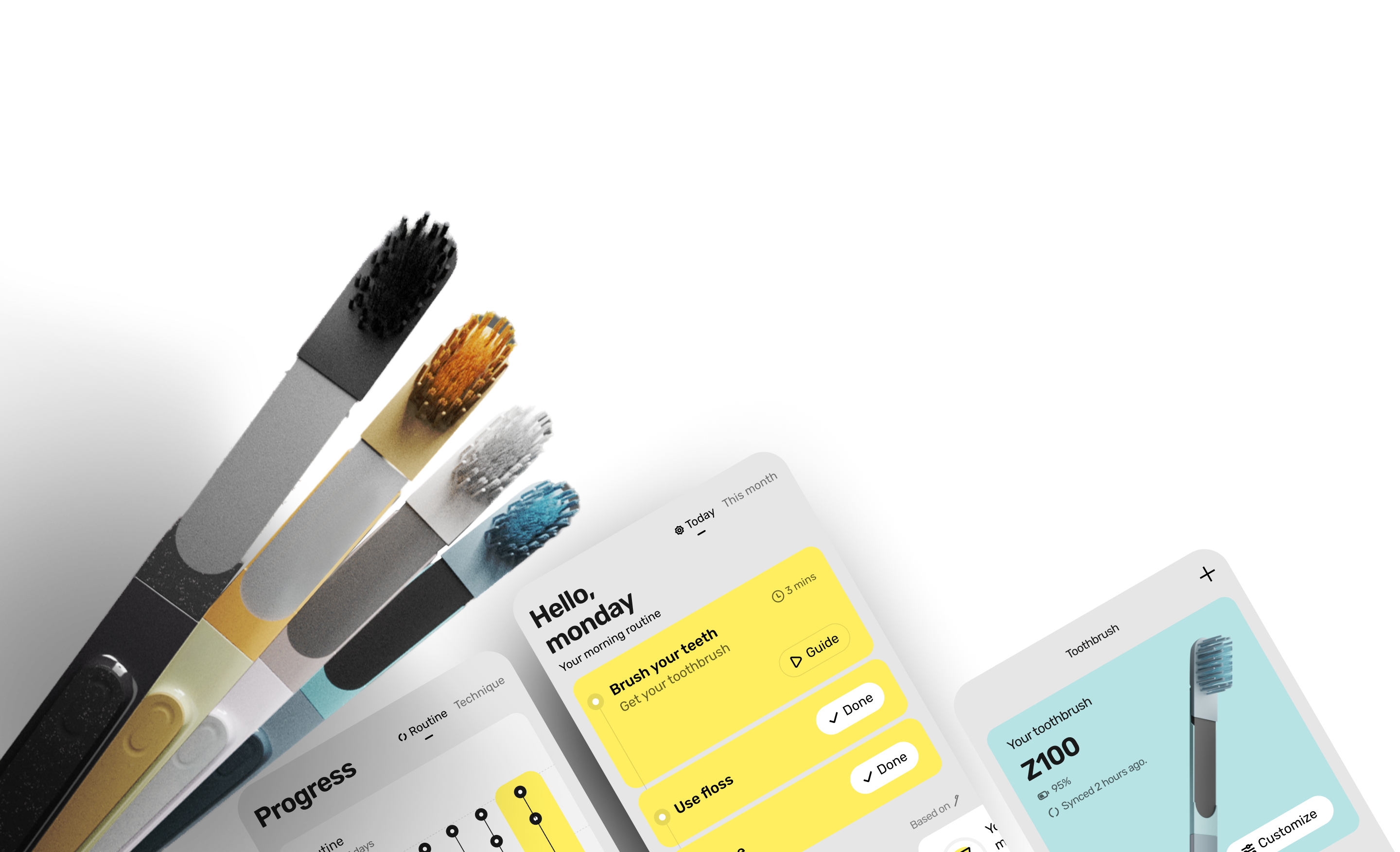
The app is what makes the hardware worth having. Session tracking, technique feedback from the sensors, nudges toward flossing and dentist visits when the data suggests they are overdue. Information shown in context rather than as raw numbers; not how many times you brushed this week, but whether the habit is actually getting better.
Users set their own goals and control how often the app checks in. The features work when they are needed and stay quiet when they are not. All of it, for smile's sake.