How do you design a smart toothbrush?
This research was about discovery: letting real people fill in the gaps. Five interviews, recorded and processed, each one a chance to understand how people actually relate to their oral health, their routines, and the idea of a smarter toothbrush.
The empathy
The ambition is real. The routine is not.
Two archetypes emerged from the interviews. The first is conscious and tech-savvy; they have built a solid oral care routine on the advice of their dentist, already use an electric toothbrush, and still quietly wonder if they are doing it right. The second is busy and minimalist; they know what good oral care looks like, brush when they remember, and are too overwhelmed by life to add more to their routine.
What both share is a kind of background anxiety. Tartar, discolouration, sensitivity; the consequences of bad oral care are real, but the feedback loop is almost non-existent. You brush, you rinse, you leave. Nobody tells you if you did it well.
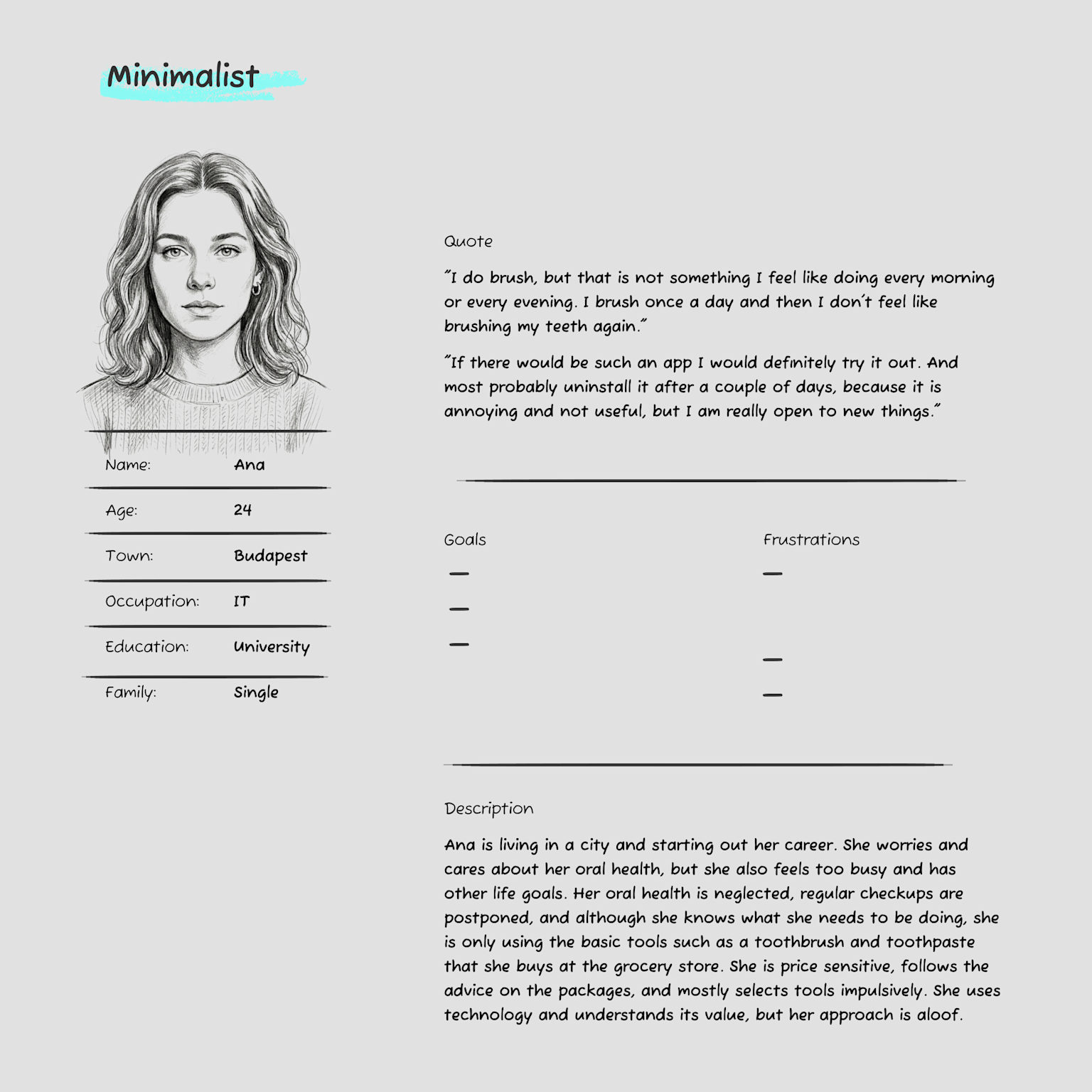
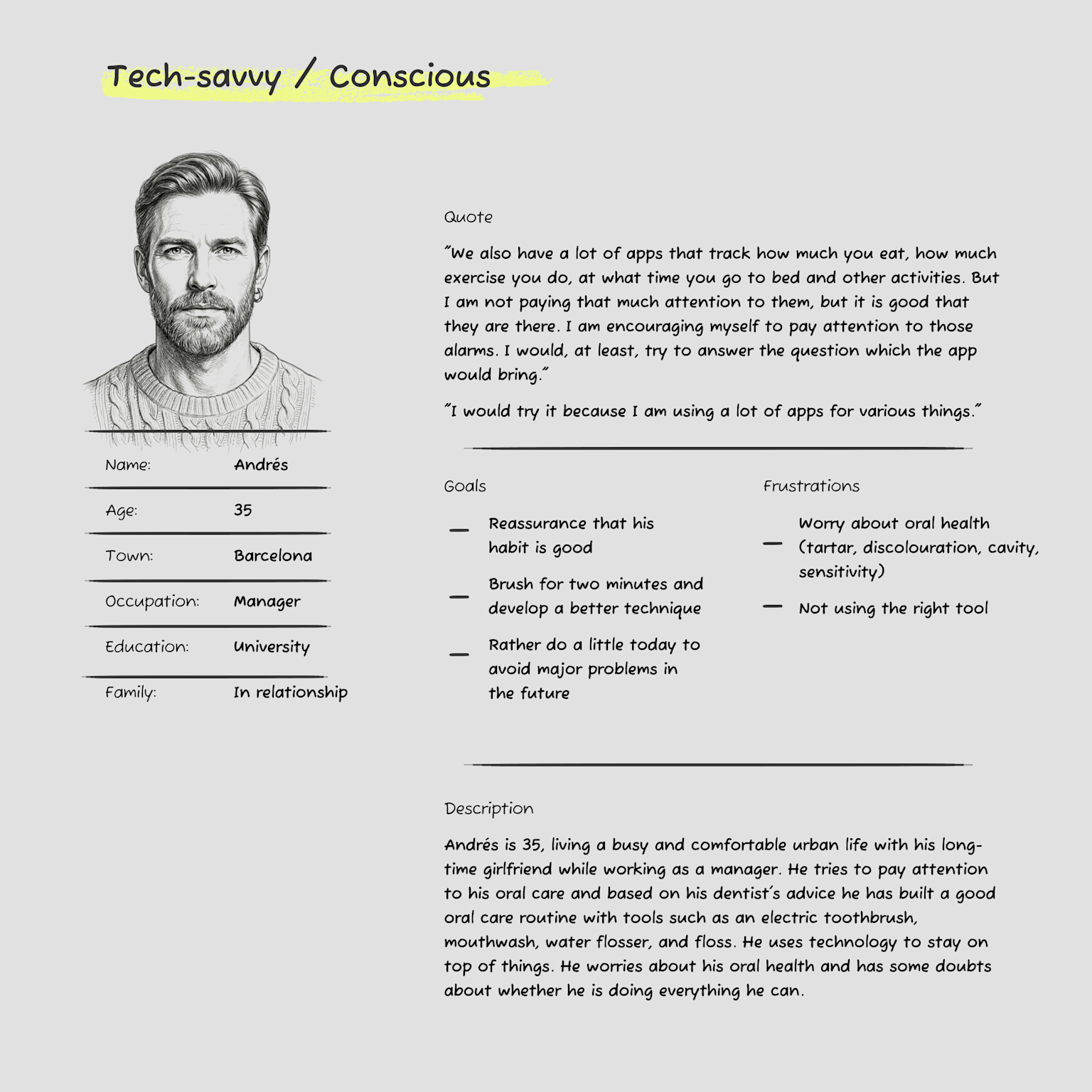
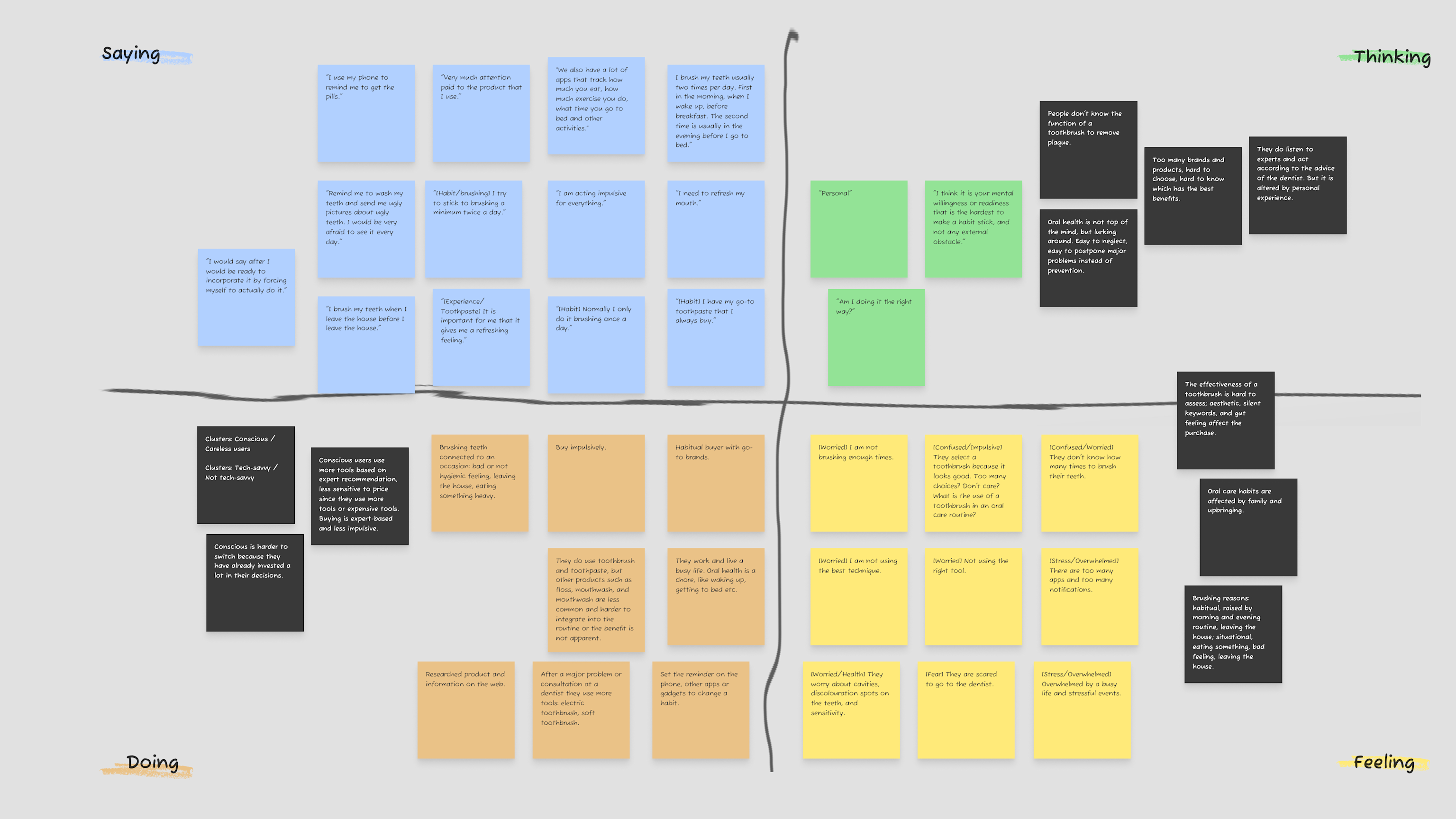
The empathy map made this visible across participants; the gap between what people say they do and what they aspire to do. Oral health sits in a strange place: everyone wants to do more, knows what more looks like, and quietly accepts that they are not quite there yet. Not laziness; just the reality of a busy life and a habit that only becomes urgent when something goes wrong.
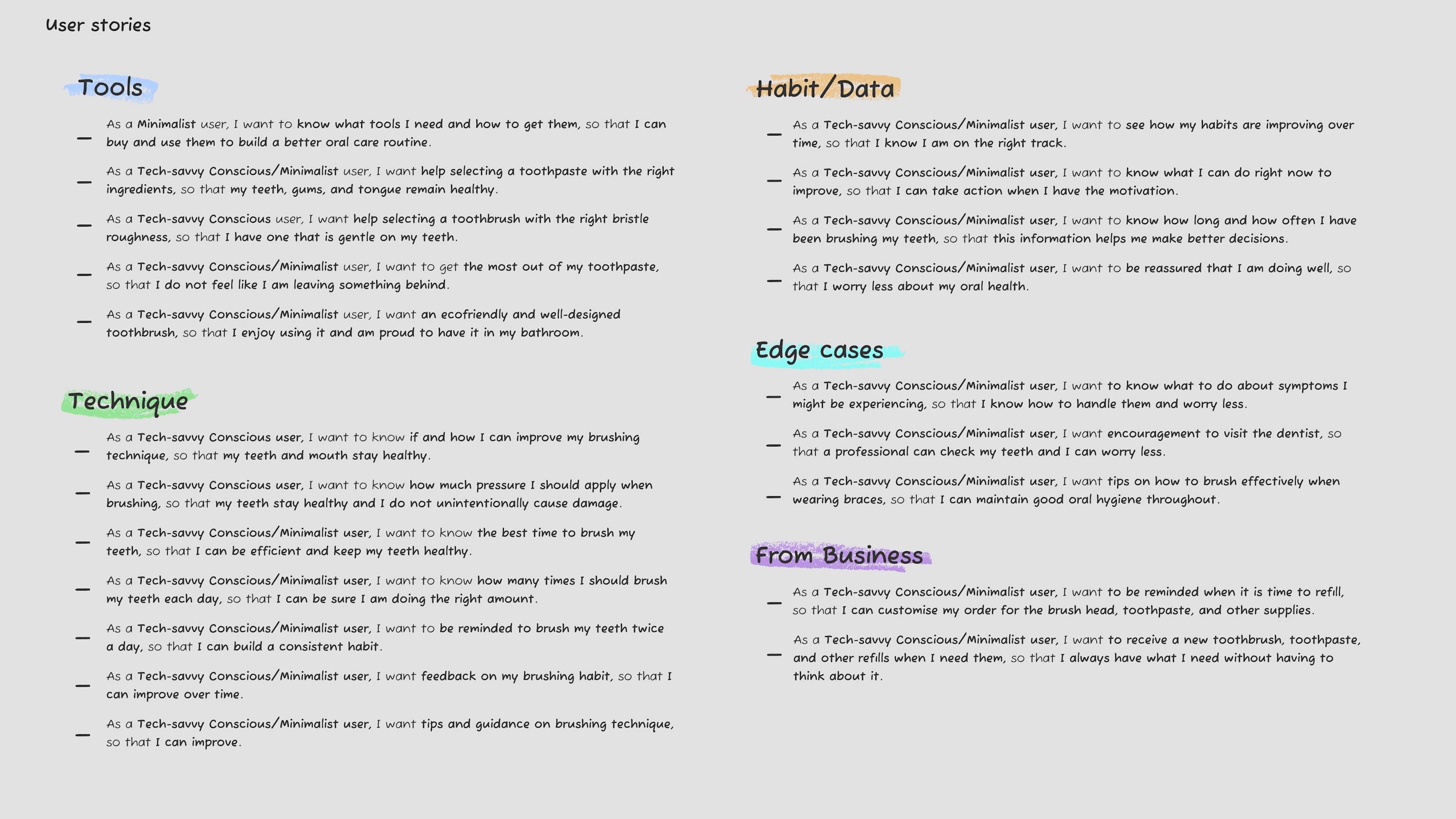
The findings were first distilled into user needs statements; translating raw observations into specific problems, each one capturing who needed what and why. These were then mapped onto the full oral care journey; brushing, mouthwash, flossing, dentist visits. Brushing is habitual but mindless. Everything else is sporadic. The dentist visit is feared and postponed. The friction is not dramatic; it is the quiet accumulation of small things that never quite get done.
The insight
The research did not hand me a product. It handed me a question: how do you integrate smart features into a daily routine without making the routine harder?
The answer the data pointed toward was invisibility. Smart features that work in the background, surface only when they have something worth saying, and reward the user for showing up rather than punishing them for falling short. Not a dashboard to maintain; a companion that quietly does its job.
One pattern stood out: people were already using electric toothbrushes. A smart device was not a leap; it was a natural extension of something already in their hands. Openness to connected features was mostly positive, but with one clear condition: it cannot become another thing to manage.
This was the focal point that shaped the industrial design, the app experience, and the sustainability thinking.
The conclusion
A direction, not a destination
Five interviews is a starting point, not a proof. The insights were directional rather than definitive; patterns worth designing toward, not a complete picture of the problem. But that was always the point. This was discovery research; a way of stepping outside my own assumptions and letting real people reshape the direction. What came out of it was not a validated product spec. It was a concept with a clear foundation: a direction worth pursuing.